
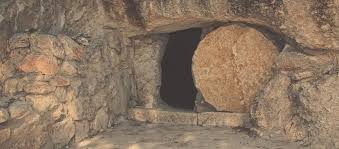
We come to the final chapter in the series of Biblical stone stories. For a recap, we have seen stones as pillows, altars, memorial pillars, giant-killing projectiles, judgement-passing tools, and potential tabernacle choirs. Now, we will see them in their Oscar deserving, albeit silent, role as best supporting actors…tomb sealers.
Our story starts about 2500 years ago. An 80-year-old man has refused to bow down to worldly government rules and now is going to pay the price. The officials want him out of the picture because they are jealous of the man and the attention he garners. They feel threatened by his existence. So, they plot against him, hoping to find some way to rub him out.
All of these things happen to him because of who he was at the core. He was a servant of the Most High. He followed God’s direction rather than those around him. There certainly was something different about this man living in a world that was not his. You see, as a boy, he was taken captive by the Babylonian army and put into the king’s service. But instead of melding in with the crowd, and “going with the flow”, he stands up to the system, stays faithful to his calling. And it is this that eventually gets him in trouble.
Those who hated him were now petitioning the king to arrest him for not following the law. What law you ask? Well, it said that if anyone prayed to any god or man other than the king, for the next 30 days, that he or she would be cast into the lions’ den. The thing that stands out in this new law, was the fact that it was only in place for 30 days. If you were serious about not allowing anyone to pray to anyone but the king, you would make it a permanent law…not just for 30 days. But clearly, these officials were not interested in actually changing the law, only in getting the target of their wrath in trouble. And it worked.
The king, deeply saddened by what he allowed himself to be talked into, has no other choice than to arrest Daniel and have him sealed in what would presumptively be, his tomb. You see, and I’m sure you are already aware of this, there were ravishingly hungry lions waiting for him. So, the officials grab Daniel and throw him in and seal the opening with…the silent actor in our story…the stone. The next several hours paint a picture of perfect dichotomy. The king, safe and sound in his palace, was so troubled that he couldn’t eat nor sleep. He wanted no company, no nightly ritual of music. No DJ. No live band playing his favorite hit songs. No fantastical light shows. Just the king…sitting in profound sadness. On the other side of that stone, was Daniel. The one who should have been dreadfully afraid of his current situation, was just fine. We don’t know if he slept in those overnight hours. I believe he most likely was wide awake, praising God. Doubtful that he was partying like it was 1999, but one thing we do know though…he was at peace with praying when the law said he couldn’t. And when the king came running the next morning to roll away the stone, Daniel was just sitting on the floor, surrounded by lions who seem completely at home with a human in their midst. Darius yells into the cave to find out if he is still alive, and Daniel responds, “My God sent his angel and shut the lions’ mouths, so that they have not hurt me.” Oh, yes; if only that cave-sealing stone could talk, what a story it would tell.
——————————
Our story continues about 2000 years ago. A 33-year-old man has refused to bow down to the worldly government and now is going to pay the price. The officials want him out of the picture because they are jealous of the man and the attention he garners. They feel threatened by his existence. So, they plot against him, hoping to find some way to rub him out.
This man, like Daniel, believed in following God’s direction rather than those around him. Like Daniel, he also prayed. A lot. He met people in their distress…in their struggles…in their sorrow…in their shame…in their sin. He healed. The leper. The blind. The lame. The deaf. The possessed. And he healed on a Monday. A Tuesday. A Friday. And yes, a Saturday…the Sabbath. This riled the religious zealots. There are a few recorded instances where Jesus heals on the Sabbath, but two of them highlight the Pharisees ridiculousness on a grand scale. Jesus heals a man’s hand in the synagogue. You just know the Pharisees are in the background setting him up. They probably sent the man to Jesus. But Jesus turns the tables on them and gives them a different scenario. If one of their sheep had fallen into a pit on a Sabbath, wouldn’t they lift it out, even on a Sabbath? Jesus is challenging them with the profound truth that a human is of much greater worth than a sheep. Yet it enrages the Pharisees. In another instance, a woman has suffered from what the Bible calls a spirit of infirmity. She is severely crippled, bent over with no ability to straighten herself up. Jesus heals her, and once again, the Pharisees have a meltdown. What comes out of their mouth next can only be described as an “out of touch with reality” statement…“There are six other days on which men ought to work; therefore come and be healed on them, and not on the Sabbath.” It would be laughable if it weren’t so infuriating. Jesus responds again by comparing what they would do for one of their animals on the Sabbath, all while neglecting their fellow human.
Fast forward a year or so, and Jesus is found guilty of fabricated charges, is beaten, killed on a cross, and put into a tomb. A tomb sealed with a stone. And those outside of Jesus’ tomb knew what those standing outside that lions’ den knew. The one inside was a goner. Neither audience believed for a moment that the occupant would come out of their stone-sealed home. But just like the stone over Daniel’s supposed-to-be tomb, the stone covering Jesus’ tomb had a story to tell. And if you thought the story of the stone covering the entrance of the lion’s den was incredible, prepare to have your mind blown. Inside Jesus’ tomb, something unfathomable happened. The once dead corpse begins to breathe. The pale skin begins to retain color. The blood that escaped his body through spike-induced holes in his wrists and feet, starts to flow through his veins once again. His eyes open and in a flash, Jesus is alive. Oh, yes; if only that tomb-sealing stone could talk, what a story it would tell.
——————————
A king ran to have the stone removed and found the man inside alive.
A man ran to have the stone removed and found the king missing.
One stone sealed in a man who refused to bow to the ways of the world.
One stone sealed in a man who came to save that world.

 Faith, Leadership, and History