Featured

The New Journey

As I start on this journey, I want to first convey how all of this originated.  You see, I have been fascinated with history since junior high school.  As a 30-year veteran of the Air Force, I sought ways to communicate leadership principles through the amazing stories of those I read about in the history books that line my shelves.  Then I thought about how I could integrate those two ideas (leadership and history) into the stories of faith that I had studied for years.  This blog is the result of how relating these three areas has inspired me and made me want to be a better person.

My heroes from those books had names like George Washington, Wilbur and Orville Wright, Colin Powell, George Marshall, and many more.  What made them stand out?  Why did they prove to be men and women of greatness?  What propelled them through failure to ultimate success?  As I uncovered some of what I thought were the answers, I wanted to relate them to others.  Again, that is the point of this journey.

Just like everything in life, people will interpret something in any number of ways.  This journey just happens to be how I look at the relationships between faith, leadership, and history.  You, no doubt, will look at it through a different lens.  That is why diversity is such a great thing.

An an amateur just starting out, I welcome conversation, and of course, any positive suggestions for improvements.  Here I go…


Annales Psalmorum – Chapter 5

Psalm 5

Have you ever been on a cellphone call and then it gets dropped? Or maybe you are driving and pass through a “dead” zone where, in spite of the call not being disconnected, one person is unable to hear the other? You speak those four oft-repeated words, “Can you hear me?” All the while the person on the other end of the call is asking the same question. Back and forth you go, taking turns…“Can you hear me?” “Can you hear me?” And then just as suddenly as the call was disrupted, you can, indeed, hear each other again. The joys of technology.

Our relationship with God can seem like that sometimes. Rest assured, it is not His end that is not receiving the message. His connection is just fine. We might think God is not listening because we are not seeing the fruits of our prayers. But make no mistake, He hears every word. Because here is the deal. We don’t live in a relationship with a dormant God. Nor a dead God. Nor a deaf God. He is alive, real, and has perfect hearing on every decibel level that exists. Serving in the Air Force and spending a lot of time on the flightline next to running jet engines, my hearing is pretty bad. But God, listening to every prayer, every time, from every person, somehow has never developed tinnitus nor a diminished capacity to hear.

David understood God’s open lines of communication. Open the book of Psalms and choose any of them he authored, and you will see that he was a guy who believed that God could hear his sorrow, his triumphs, his questions, his frustrations, and his praise. Read the opening verse of Psalm 5, “Give ear to my words, O Lord, consider my meditation. Give heed to the voice of my cry, my King and my God, for to You shall I pray.” That certainly sounds like a guy who believes his God has perfect hearing. Also, I don’t know anyone who would spend as much time as David did praying to God and not believe that He indeed is listening. It would be absurd to do that.

He spends the next several verses pointing out the evil that has risen and grown amid his kingdom. He writes about those who are not faithful, who are full of iniquity, mouth full of destruction. But like any good writer, he comes around full circle to close with some positive news. “All those rejoice who put their trust in You; Let them ever shout for joy, because You defend them…You, O Lord, will bless the righteous; with favor You will surround him as with a shield.” Again, does this sound like a crazy dude who believes he is just talking to trees or rocks, or some imaginary friend? Nope. He is conversing with Yahweh, the most high God, the Creator. And in this conversation, there is no threat of a disconnect or dead zone…just a clear line from a king to THE KING.

Annales Psalmorum – Chapter 4

Psalm 4

Psalm 4 is kind of a mixed bag. There is a lot going on as the writer, David, is having a conversation with God, and then with the reader. But tucked in with these 8 verses, is a single verse in which God, takes the pen from the hand of David, and writes a sobering statement. A statement that every one of us needs to hear loud and clear. A statement that should have us turning from our sin-soaked reality, and sprinting at what Captain James T. Kirk would call Warp Factor 5, to the open, waiting, forgiving, merciful, compassionate, and caring arms of Jesus. A statement that should pierce our heart like an arrow from the bow of Robin Hood at 50 paces. A statement that…ok, ok, I get it. You want to know what that statement is. So, without further ado…music rising to a crescendo…curtain going up…and… “How long, O you sons of men, will you turn my glory to shame? How long will you love worthlessness and seek falsehood?” 

The first part may be obvious to us, but what about that second sentence? What exactly is God saying here? What does he mean by loving worthlessness and seeking falsehood? Well, in the Old Testament, worthless and falsehood are descriptions associated with false idols. And here is the part where we tell ourselves that we do not have any false idols, and how dare someone tell us we do. 

Oh sure, most of us don’t have little statues of Artemis or Zeus laying around our houses. We have no intention of gathering all our gold jewelry and melting it down so that we can shape it into a cow, only to claim it somehow formed itself into a mystical bovine. But have you ever chased after a promotion so hard that it became the number one priority in your life? Have you ever made knowledge the holy grail, never being satisfied with what you know right now? Are you always after the latest sports car? Bigger house? Latest medical procedure to make yourself look 20 years younger? Ouch.

Let me stop here, take a couple of steps back, and for a moment, be real…be transparent…be vulnerable. Because I have. There were moments in my 30 years in the Air Force where I spent a lot of time studying and preparing for the next promotion. I like to believe that I did not put it ahead of my relationship with God, and my family. But if I being completely honest…and that is the goal here…I am sure there were times when I failed at prioritizing the right things first. Education? Yep. I went hard after earning degrees. Same thing; failed correct prioritization. I have never felt like I had to have the newest car or house. I’m driving a 16-year-old car, and my bride and I are living in our forever home. And I’m nearly 60 and have no plans for cosmetic surgery. But I have had other challenges. Let me throw this one out there. For most of my time as a Christ-follower, I have made scripture memory an important component of that relationship. Several years ago, a friend gave me a developed plan to memorize the entire New Testament. I know it sounds crazy. But I took the challenge. I started with the book of James, because that is one of my favorites. Then I moved on to 1 Timothy. Then Titus. And while I was memorizing the closing verses of Titus, it hit me. What was I doing? I was so busy chasing the goal of memorizing God’s word, that it became more important than God’s word. Let me repeat that for those in the back. I was so busy chasing the goal of memorizing God’s word, that it became more important than God’s word. In other words, I made scripture memorization a false idol. Not because God’s word isn’t worth memorizing. Of course it is. In fact, the psalmist reminds us that one of the greatest ways we can combat impurity is by memorizing scripture. That way, we can fight temptation by remembering what God’s word says, just like Jesus did in the wilderness when tempted by the devil. But that has to be the reason for memorizing scripture, not because you are following some plan.

Promotions, homes, cars, education, knowledge. None of these things are bad or evil…except when they usurp the rightful place of God. Instead, we should remember that God’s word says:

  • Promotion comes neither from the east, nor from the west, nor from the south.  But God is the judge: He puts down one, and exalts another. (Psalm 75: 6-7)
  • Do not worry about your life, what you will eat or what you will drink; nor about your body, what you will put on. (Matthew 6:25)
  • The fear of the Lord is the beginning of wisdom, and the knowledge of the Holy One is understanding. (Proverbs 9:10)
  • Let not the wise man glory in his wisdom; let not the mighty man glory in his might; nor the rich man in his riches; but let him who glories glory in this, that he understands and knows Me. (Jeremiah 9:23-24)

If we do these things, then the last verse in Psalm 4 becomes real in our lives. “I will both lie down in peace, and sleep; for You alone, O Lord, make me dwell in safety.

Annales Psalmorum – Chapter 3

Don’t Be a Cover Judge – Psalm 3

Don’t judge a book by its cover. We are told that time after time, knowing full well that it is not really about a book and its cover. It is, instead, a warning against forming an opinion about something, or someone, before learning the full story or getting to know the person beyond their appearance. And yet, time after time we ignore those words, and do exactly that. I believe we all have stories where we were not faithful to this lesson. In fact, I was retaught it this week. Without going into detail, I met someone this week and formed an early opinion, only to be blown away by who the person actually is beyond the surface appearance. Perhaps one of these days I will have it permanently engraved in my head to simply not formulate an opinion before spending time with the individual.

What does this have to do with this entry on our Psalms Chronicle journey? Well, Psalm 3 starts off with a middle-aged David on the run, hiding from his own son, Absalom. Let’s just stop there and really think about this. David is king, probably about 60 years old, and fleeing from his own flesh and blood, a son who has formulated a coup to overthrow his dad. Did you get that? The king…the guy ruling the country…the man who was a legend for singularly taking on and killing the pompous, loud-mouthed Goliath, is now in the fight of his life, against his son, who the Bible describes as the best-looking man in all of Israel, and who is said to have cut his hair once per year, with the cut hair weighing in at a whopping five pounds. I cannot imagine his budget for gel and mousse. Wonder what his stylist thought when Absalom walked into the salon for his annual trim?

Now, David is in the throes of despair…at least that is what those who are pursuing him want us to believe. Here is David’s in his own words, “O Lord, how many are my foes. Many are rising against me; many are saying of my soul, there is no salvation for him in God.” Did you catch that? Those chasing after him believed God had abandoned him. And if David listened to his enemies, he might never have written the rest of the chapter. Thank goodness he didn’t, because the words that follow are some powerful ones. Here are a few selections: “You, Lord, are a shield about me, my glory, and the lifter of my head.” “I lay down and slept…for the Lord sustained me.” “I will not be afraid of many thousands of people who have set themselves against me.” And then my favorite, “Salvation belongs to the Lord; your blessing be on your people.” Do those words sound like someone in distress? I don’t think so either. Instead, those are the words of someone who is confident in the ability of his God to protect and save him.

It is that classic judging a book by the cover. David in the crosshairs, thousands hunting him down, no one has anything good to say about him…so he should be a total wreck. I know I probably would be. But David who has seen his share of ups and downs finds himself resting in the protective arms of his Lord. Psalm 3 is a tale of two stories. The first two verses are a complete 180 from the next six verses. The end is not like the beginning. The conclusion is a complete opposite of the opening salvo. The David that his pursuers want is not the David under the protection of God. Alas, the book is not like the cover.

Annales Psalmorum – Chapter 2

ROTFL…Is It Real? Psalm 2

LOL. We all know what this means. We have used these letters hundreds of times…some of us, thousands. I’m not much of a text warrior, but even I’ve typed this shortened version of “laughing out loud” many times. Now, if you hold a seventh-degree black belt in phone texting, you may have even used ROTFL…which of course means “Raccoons Only Take Free Lunches”. LOL, or maybe you are even ROTFL, which, in all seriousness, means “Rolling On The Floor Laughing”…something I have never actually done, even though I have texted it. So, to those handful of people that may have received that textual acronym from me…sorry I led you to believe that I sometimes find myself rolling around the floor laughing at something you sent me. There is literally nothing that funny that will cause me to do that. Well, maybe the 1980 movie “Airplane”. “Surely you can’t be serious”, you say. Yes…yes I am, and stop calling me Shirley. See what I mean? Right about now you are at the very least LOL, but more likely ROTFL.  

Alright, now that we have that settled, let’s get down to business. My Bible labels Psalm 2 as, “The Messiah’s Triumph.” And oh, what a triumph it was about 1,000 years later. But at the time of writing this particular Psalm, nations were routinely rising up against what God was accomplishing in his creation. Seems nothing has changed millennia later. And the response of God, both then and now, is the same. Laughter. Don’t believe me? Look at verse 4. “He who sits in the heavens shall laugh.” This is the one time I could actually believe someone rolling on the floor laughing. The creator of all things watching what he created come together and attempt to tear it down. Can you imagine the laughter? But hold on…there is more. Because with the laughter comes derision. With derision comes his voice of wrath. With wrath comes distress. With distress comes displeasure. Derision, wrath, distress, displeasure…all because the creation seeks to sit on the throne of the creator.

Here we have earth’s kings vying for the place of ruling authority, and God’s response is, “Yet, I have set my King on my holy hill of Zion.” In other words God tells them, you can all do your best to be exalted, and it won’t matter, because I am the one who has already chosen the King. Fast forward thousands of years and we see in Revelation 11:15, “The kingdoms of this world have become the kingdoms of our Lord and of his Christ, and He shall reign forever and ever.” It is not the kingdoms of man that will reign forever and ever. No, it is the kingdom God and his Son the Messiah. 

Well, how can we avoid having the creator of the universe rolling around the floor of heaven laughing? The writer gives us the answer (or rather answers):

  1. Be wise
  2. Serve the Lord with fear
  3. Rejoice with trembling
  4. Receive God-inspired instruction

I love the last words of Psalm 2…Blessed are all those who put their trust in Him. “All”. Not some. Not a few. Not just those who appear to have it all together. No…all. And that is the best news ever…LOL not required. 

Annales Psalmorum – Chapter 1

What Do You Want to Be (Psalm 1)

Greek philosopher Epictetus wrote, “You become what you give your attention to.” I can almost guarantee you have experienced this phenomenon yourself. At one time or another you found yourself scrolling through social media and hanging on every word an influencer spoke. Soon, you realized the power that individual had over your thoughts, your actions, your decisions. Or maybe you got hooked on a specific news channel and viewed the world only through the lens they provided. In other words, you became what you gave your attention to. Epictetus was not dumb…he understood how we could be affected by something we might never have allowed if we didn’t spend the time in that arena. 

Epictetus later wrote a statement that expanded on this; “Other people’s views and troubles can be contagious. Don’t sabotage yourself by unwittingly adopting negative, unproductive attitudes through your associations with others.” Together, these two statements warn us against those who would drag us down a dark path, absorbing our positivity and transforming us into something we are not.

As we crack open what the book of Psalms has for us today, we cannot but help notice that centuries before Epictetus, the writer understood this same principle.

“Blessed is the man who walks not in the counsel of the ungodly, nor stands in the path of sinners, nor sits in the seat of the scornful.” The first verse of the first psalm starts off with a bang. If we want to be effective in our corner of the world, then it is best we understand two facts about this verse. The first one centers on admonishing us against listening to the recommendations or guidance from those who are ungodly. Are those who the writer is describing here going to have conversations with us? Of course! But when we begin to entertain those words, we will inevitably start to have problems. The second fact is this: stand and sit are two words that paint a picture of someone who has actively stopped and joined those who the writer would caution us against. In other words, he says, “You’ve been forewarned.”

It is here that I want to be clear…I am not saying don’t interact with people who are sinners. I mean, we are all sinners, so there must be something more to what he is saying. There is, and it is this…if we actively absorb (sitting and standing in their self-created environment) what it is the scornful and ungodly are selling, then we are doing the exact thing, Epictetus warned us of. The words and actions can take hold and become a contagion. 

So, if we are to be that city on a hill that Matthew refers to, how do we navigate against becoming the sinful, scornful, and ungodly, all while not neglecting them? The answer is in the next verse. “But his delight is in the law of the Lord, and in His law he meditates day and night.” We must live in the Word. It must be a part of our DNA. The writer says the one that is blessed is the one who mediates day and night. Obviously, it is not a literal 24-hour requirement, but it is also not just a few moments here and there to ease our conscience of convenience in a half-hearted attempt at what Jesus is really calling us to…transformative, Spirit-filled discipleship. And when we are obedient to meditating on God’s word, we become next-level concerned for those are lost in the dark. Our compassion grows. Our actions begin to reflect Christ. We provide ministry to those lingering on the path of sin. We meet the needs of those wasting away in bitterness. We bathe in prayer those making life choices that lead to death.

Let me close this first Annales Psalmorum (Chronicles of the Psalms) with how we started…Epictetus’ words. “You become what you give your attention to.” I cannot think of any better person to strive to become like, than Jesus. And if Epictetus’ words mean anything, it is going to take us giving our attention to Jesus and the life he lived.

The Story of Easter (Part 2)

It’s called Good Friday…but those who were there didn’t see anything good. At least, none of those who spent the last three years in his circle. Oh, how their thoughts must have swirled in their heads. How many times had he said it? All this talk about being betrayed and killed…it just didn’t make sense. And that time he talked about the temple being destroyed and then rebuilt in three days? And what about that childhood story of Jonah being in the fish for three days? What did any of that have to do with what now unfolded before them? What did he mean when he said that he would be lifted up so that he could draw all people to him?

It’s called Good Friday…so, what was good about it? It was a day of death. A day that witnessed the shedding of innocent blood. A day that, though prophesied and written about for centuries, caught those who were his closest friends off guard. A day where the sacrificial Lamb of God bore humanity’s transgressions…all of it. Every fiber of Jesus’ existence bearing every sin. Every. Single. One. That lie you told three years ago. Yes, Jesus bore that. That impure thought from yesterday. That was laid on the Son of God. That time you cheated on the math final in your senior year of high school. Yep, placed on the King of kings. The gossip that you helped spread that separated friends. Yes, that too. But it wasn’t just your sins. It was your neighbor’s. It was your boss’s. It was sin of that annoying guy at the gym. It was your father’s, brother’s, nephew’s, cousin’s, former roommate. (IYKYK) It was all added to the pile of vile wretchedness that, in a moment, caused a Son to experience an unbearable soul-crushing weight. 

It’s called Good Friday…and the battle for humanity has leveled up. The sky has darkened. In the middle of the day. For three hours. It’s not a solar eclipse. Clouds are not blocking the sun’s rays. It is the blackness of sin on a totally global scale. Satan and his minions are warming up for the grand finale. They can taste the impending victory. Triumph is in their grasp. It won’t be long now. When the moment arrives, three words are spoken. Barely audible. Separated by dying gasps of air. Three words…It is finished. And with that, the earth shakes, the veil is torn, and the Son of God is dead.

It’s called Good Friday…and the enemy, though he doesn’t understand those final three words, revels in victory. He took down the first Adam with a tree. And in the move of a lifetime, he took down the second Adam with…you guessed it, a tree. But he has an uneasy feeling this time around. It’s not like that first round. Though he is too arrogant to stop and give it any serious thought, there is something about those three words. It is finished. What do they mean?

It’s called Good Friday…because in just three days, those three words are going to take on a whole new meaning. It is finished. The redemptive work orchestrated by God the Father and fulfilled by God the Son is done. The betrayal. The anguish. The suffering. The death. All of it. The record of debt that stood against us? It is finished. The sin that lead to condemnation? It is finished. The sting of death? It is finished. Grave’s victory? It is finished.

It’s called Good Friday…because it is. 

The Story of Easter (Part 1)

It is Act 1 of the drama that will unfold over the next 60 hours. The man who for the last three years walked around teaching, among other things, that he was the Son of Man, Son of God, the promised Messiah, the Christ, the Anointed One, was now under arrest.

This arrest says everything about those who take him away. They slink in under the cover of darkness. The carefully selected opportunity is a secluded garden well known by Jesus and his disciples. Like a specials ops team appearing out of nowhere, the mob, armed with torches and swords, is suddenly there, surrounding the target. If one didn’t know better, one might think they were hunting down Frankenstein’s monster, not the one who healed the sick, made the lame walk, raised the dead, and gave sight to the blind. It was, in every sense, a well-orchestrated, inside job. And before it was over, lives would be irrevocably changed.

In discovering one of the major subplots of this night, we must first return to a post-meal conversation between Jesus and Peter. The Bible often refers to John as the disciple whom Jesus loved. I think Peter should be known as the disciple who routinely stuck his foot in his mouth. He was a brash, act now…think later, kind of guy. I can totally relate. That conversation went like this – Jesus: “You will all fall away this night.” Peter: “Though all these others fall away, I will never fall away.” Jesus: “Tonight, before the rooster crows, you will deny me three times.” Peter: “Even if I must die with you, I will not deny you.”

Well, Jesus is led away to see Caiaphas, the high priest. In a predictable move, the officials have lined up some “witnesses” who verify that Jesus had said some unscrupulous things. Of course, we know that he didn’t, but it’s the Pharisees, so why would we expect anything less than lies? But as all this goes down, Peter is within earshot, and people are starting to take an interest in this bystander. The first is a servant girl, “You were with the Galilean”. “No”, Peter replies. He then moves over to where someone had started a charcoal fire to warm themselves. While standing near the fire, others took note of his face, and asked him, “You are one of his disciples, aren’t you?” Peter again denies the allegation. Then one of the servants of the high priest recognized him, “Did I not see you in the garden with him?” A third time Peter denies the accusation.

A rooster crows…

Luke tells us in that exact moment, Jesus turns and locks eyes with Peter…and the disciple, who routinely stuck his foot in his mouth, runs out and weeps…bitterly. Alone.

The next time we see Peter, he is running again. This time he is running towards something, not away. And this time he has a running partner. John. They arrive at Jesus’ burial tomb. John, arriving first, peers in from the outside. Peter, the brash, over the top, leap before you look disciple, goes full investigative mode and walks into the empty tomb. There are the burial clothes, nicely folded, as if Alice from the Brady Bunch had tidied up the place. But there is something missing. Rather, there is someone missing…Jesus. Right about now, you would expect something dramatic to happen. And you would be disappointed. For they simply go home.

In the early hours of the next day, long before the sun broke the horizon, Peter decides he is going fishing. I don’t know why in this moment he chooses to return to his prior occupation. Maybe it is the familiarity of it. Maybe he needs to re-center himself. Maybe, instead of sitting around having to deal with his emotions, he just needs to do something manly. That seems the logical thing. After all, he is a dude, and dudes don’t often deal with their emotions and feelings in the best way. Several of the other disciples decide not to deal with their emotions either, and go with him. Just as you might expect, they catch nothing. I mean, why would they? Nothing is going their way this weekend. Their friend is dead; his body is missing; they all said they would never abandon him, and yet that is exactly what they did. And now, to make matters worse, some stranger has shown up on the shore, acting like a game and parks employee ready to pounce if they exceeded their daily catch limit, is asking how many fish they caught. Dejected, they have to admit they have none. “Cast your net on the right side of the boat”, says the stranger. The irritation had to have palpable. “Really? This guy is going to just show up and know where the fish are?” But next thing you know, the nets are bulging, and the disciples can’t bring in the haul. John is the first one who realizes that the stranger is no park ranger…it is the Lord. Peter, hearing the news, does what Peter always does. Act now, think later. He plunges in and, I have to believe, was once again in running mode. Have you ever tried running in water? It’s tough, and slow. But no matter…Peter is running to his Lord.

He gets to the shore, soaking wet, and there is a charcoal fire. Peter stands next to it, warming himself up. I wonder if Peter’s mind went back three nights to when he stood at that fire outside the court of the high priest. That night where he would do what he considered unthinkable…deny knowing his Lord. No matter. He was here. Jesus was alive.

One could not write this story any better. John uses the same Greek word, anthrakia, to describe both charcoal fires. It is the only two instances of this word in his gospel. It is almost as if he is tying the two events together. The first fire resulted in the rejection of Jesus by Peter. The second fire resulted in the redemption of Peter by Jesus. The first fire was fueled by regret. The second was fueled by restoration.

Peter, the disciple who routinely stuck his foot in his mouth (sorry, I could not resist one last time), would later write in his own letter, of a faith tested by fire. I don’t know about you, but I think he might have known a little something about this. 

Sleep Is For the Weak

September 11, 2001. If you were old enough on that date, you can recall exactly where you were and what you were doing when you heard the news of the terrorist attacks. The nation, really the world, became fixated as it watched events unfold live on TV. I was stationed in Turkey. We were immediately locked down and could not leave the base. It was not a fun time.

I was the historian for the 39th Wing and was busy trying to write the semi-annual narrative history of what our unit had accomplished in the first half of 2001, when the attacks in the United States occurred. What is a semi-annual history? I’m glad you asked. It is roughly 100-200 pages of descriptive narrative (and thousands of pages of supporting documents) describing the events and operations of the wing. It involves hours of interviews (which you then must transcribe), collecting many hundreds supporting, primary-sourced documents, attending multiple weekly operational briefings, analyzing all of that data, and finally, sitting down to write a cohesive story of what all those documents and interviews describe. It is a long process. That September day though, a lot changed. Chaos reigned, and it wasn’t long before the “secret” phone rang in my office. This phone was one in which you could talk classified information on, and I occasionally used it when talking to those at higher headquarters. When I answered, it was them, and they had a task for me. I was now, in addition to my regular writing, responsible for collecting documents and writing the history of combat actions of a new warfare center that activated as a response of the events of September 11th. By day, I continued writing the semi-annual history of the 39th Wing, and by night, I interviewed war operation planners and worked on writing the history of the warfare center. I was being pushed and pulled into two different directions, and I had to find a way to prioritize my available time. Right now, the manly thing to say would be, “Sleep? Hah, who needs sleep. That’s for the weak.” But to be honest, it really was like that. Not a lot of sleep occurred for several weeks following the September 11thattacks. 

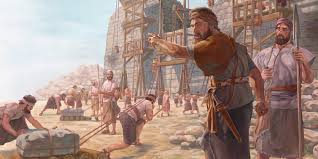
Nehemiah looks over the ruins of the city and now has to make the plan. He will be pushed and pulled over the next several weeks. There are daytime projects and nighttime projects. There are literally hundreds of epic-sized things that need to be done. Each one begs to be tackled first. Now, thousands and thousands of leaders have stood in those same shoes…overwhelming odds…stretched to their limits…asking themselves what task they should check off first…perhaps even asking themselves what they have gotten themselves into…perhaps debating walking away from the situation altogether. Nehemiah certainly felt the crushing weight of all those challenges. He stands looking at piles of stones. What once had been a thriving city, now looks like the living room floor after a two-year old obliterates the largest Lego kit ever seen by man. The city was now in a billion pieces. It would be so easy to walk away.

I can’t imagine.

Actually, I can. Nearly two years ago, an EF-4 tornado ripped through a community very near to us. I spent several days working cleanup in various neighborhoods that were hit. I remember walking through one, ending up in a section where the homes were all gone. This memory is lasered in my mind. I stood on this one particular property and was astonished that there was no evidence of a house ever being there, except for the basement that you could now look directly into. And then I walked over a slight ridge, and there were the remnants of what was probably several houses…in a billion pieces. I know what you’re thinking…“Really? A billion?” Yes, a billion. And now my job was to comb through those billion pieces to find a few keepsake items worth saving. It was overwhelming. I’m not ashamed to admit that I stood there and wept. I completely understand the psychological trauma of those who do this for a living. Where do you start? What pile do you attack first? So yeah, if you are not committed it’s easy to walk away.

Nehemiah doesn’t have that luxury though. If he doesn’t take it on, who will? Nobody has risen to the occasion. No one else raised their hand. No, Nehemiah is the one chosen by God to see it done. The walls, gates, enforcements, and residences…all of it…need rebuilt. Each project is a headache. So, Nehemiah does what a great leader does…pop some Tylenol and make a plan that prioritizes the problems that lay in front of him. He determines safety and security is priority number one and needs to be addressed immediately. So the walls and gates must come before anything else. No doubt there were those present that argued for their house to be rebuilt first. “Where am I supposed to lay down my head after a hard day’s work?” “I’ve given more than my share of offerings at the temple.” “Don’t you know who I am? I’m the mayor.” And on and on. That push and pull. But, what good would that be if the enemy could just walk right up and destroy it again. No, the walls and gates must be priority one. The Bible says, “So they strengthened their hands for the good work.”

Nehemiah then creates teams of builders to get after the wall building and gate restoration. More on this next time, but it is important to note that leaders don’t just let people go off and do whatever feels good. No, leaders organize the crowd into teams skilled at the work that needs to be done. If not done this way, you end up with all your plumbers in one group working on HVAC systems, and your HVAC pros working on excavating trenches and pouring concrete. Utter chaos. Again, Nehemiah understands what needs to be done so he creates jobsite teams to get the work done. As the walls are rebuilt, gates are being restored. There were 10 of them around the city…the Sheep, Fish, Old, Valley, Dung (lol), Fountain, Water, Horse, East, and Muster. Each one had a specific purpose, and those working on them were skilled with understanding.

I will leave this here until next time, as we see Nehemiah move from the planning and organizing, to further strategizing. We will see that Nehemiah faced challenges that were more than inanimate brick and stone. He came up against flesh and blood opposition as well. Old Sanballat, Tobiah, Geshem…the three musketeers of discord. 

Midnight Rides and Car Keys

I remember when I enlisted in the Air Force and arrived at my first assignment, Altus Air Force, Oklahoma. I had been there a year or so, when my supervisor handed me a copy of the Professional Military Examination Study Guide. It was over 600 pages of information ranging from Air Force history, to command structure, to uniform standards, to military justice, to standards of conduct, and everything in between. One of the chapters dealt specifically with leadership, including development, philosophy, styles, etc. I will always remember the definition of leadership given in that book – very rudimentary. “The art of influencing others.” Two things come to my mind when I recall that definition. First, leadership is an art. It is intuitive, relies on human experiences. Second, “others” are involved. That simply means you need to understand that, as a leader, your words, your actions, your decisions affect the lives of others…and you better not take that lightly.

Quick recap from last week. We were introduced to Nehemiah, the cupbearer to the king. He finds out Jerusalem is in shambles and the people are living in horrible conditions. He asks, and is granted permission from the king, to travel to the city and rebuild it. So, he heads out, but not before obtaining letters signed by the king, giving him permission to traverse through the region without fear of attack. He also gets permission to requisition timber from the king’s forest to use in construction projects.

Nehemiah travels 900 miles from Shushan to Jerusalem. What would take us half a day in a car, took Nehemiah three months on a pack animal. Not a pleasant thought…or experience. Talk about a sore backside, and don’t get me started on the chafing. But he makes the journey, because the situation in Jerusalem demanded it. What happens next is where I want to camp out for this chapter.

Nehemiah arrives in Jerusalem (again, after a three-month journey) and absorbs what he sees before giving a single order. If you are in a leadership position, let that sink in for a moment. He arrives and takes some time…the Bible says three days…before making any kind of decision. This is strategic visioning at its finest. The worst thing a leader can do is show up with no understanding of what the situation is, and start giving orders to individuals to do this or that. It creates chaos. Great leaders observe before saying a word. That is what Nehemiah does. He shows up, spends three days praying and listening to the people that are actually living there, puts on his night-vision goggles, and takes a midnight ride through the city, scoping out the landscape and seeing where all the damage lay. Now, if you are not careful, you will overlook a few critical words in these verses that describe Nehemiah’s nighttime journey. Nehemiah, painting the scene, says, “Then I arose in the night, I and a few good men…. This is the second takeaway from this blog chapter. Great leaders surround themselves with a few trusted individuals. Preferably, those who have strengths that you do not have…that can see through your blind spots…that you can trust with your life. I worked for a two-star general during my time in the Pentagon, and he worked for the Chief of Staff of the Air Force…the number 1 guy. I remember my boss telling me that if General Welsh (the Chief of Staff at the time) showed up at his house in the middle of the night and needed his car keys, he would hand them over without thinking, no questions. I thought to myself…that is what absolute trust looks like. That is the kind people you need to surround yourself with…the kind that if they showed up at your door at 2:00 in the morning and asked to borrow your car, you would hand the keys over to them without thinking. A few good men. 

Last thing for this week. Nehemiah has gone out, again with a few good men (cannot emphasize this enough), and now he comes back and gives his report to the people. Nehemiah isn’t dumb. He knows he cannot take the task on by himself; he is going to need a lot of help. The moment is palpable. It is thick with anticipation. People have gathered, closing in around this mysterious guy who showed up a few days ago. Everyone is holding their breath. Nehemiah grabs the megaphone. “The city lies in waste, the gates are burned, and we are in great distress.” He accurately describes the scene…doesn’t sugarcoat it…presents the plan…and gets the buy-in from the people. Notice what their response was; “Let us rise up and build.” Also notice what their response wasn’t; “Who does this guy think he is? He can’t just waltz in and expect us to just do what he says.” No, they have been waiting for someone. Anyone. A leader who could figure out what needed to be done. A leader with authority. A leader with compassion. A leader able to see the vision of “what will be” in the midst of the “what it is now”. But, if you are like me, you might be asking yourself…Didn’t anyone already there have the ability to step up? I don’t know. Apparently not. I don’t know if every individual in the city was too busy feeling sorry for themselves, or if they were overwhelmed by the sheer destruction, or if they were spending every waking moment playing Call of Duty on their X-Box, plotting out their special ops mission to exact revenge on those who destroyed Jerusalem. Whatever they were focused on, it didn’t involve putting the city back together. So, Nehemiah does what no one else thinks of doing. After all, he is a leader with a plan…compassion…and a vision.

Midnight rides. They are not unique to Nehemiah and his small posse. Paul Revere ring a bell? William Dawes? Samuel Prescott? Young Samuel rode the same night Paul made that famous traverse across the countryside. While the more famous Revere was captured by British forces, Prescott got away by jumping his horse over a stone wall, riding on to warn the residents of Concord and beyond. Because of his not so famous ride through the night, the farmers and other residents armed up the militia and stopped the British advance. Knowing they were beat after intense fighting, the British retreated back to Boston. The rag-tag bunch had won the night…thanks to the little less known ride of Samuel Prescott. 

Want to know more about midnight riders? Check out my blog from January 27, 2022, titled “I’ve got to ride, ride like the wind.”  Until next time…

“Here, Try This” and Other Stories of a Cupbearer

The first principle to understanding how leadership works starts with yourself. I know this sounds basic, but you would be surprised how many people don’t consider this. In their head, they figure they are the most senior person, or the most experienced, or the alpha-dominant figure in the group…and that means they lead. But it doesn’t work like that. You will get nowhere if you don’t know who you are. Well, you’ll get somewhere…but you’ll get there alone. The rest of your team will be looking for someone else to follow.

Now, on that personal journey of discovering who you are, you also must uncover the answer to this most basic question…Why do you want to be in a position where, you are responsible not only for yourself, but for others as well? (I’ll explain in later segments why this cannot be because you think it brings prestige, or something to put on a resume.) 

So, I hope you join me on this journey of discovering what true leadership looks like through the converging paths of Nehemiah, the Old Testament hero who led the rebuilding of Jerusalem; and because we are celebrating our nation’s 250thbirthday, some of the early historical figures who shaped our country…the good, bad, and ugly. 

In this first one, let’s look at those two ideas more closely…finding who you are, and why it is you want to lead. Prepare for liftoff in 3…2…1

The Bible describes Nehemiah as the cupbearer to the king. I don’t know whether you appreciate what duties the cupbearer had in the king’s court, but he was a responsibility-laden individual who could not afford to make a mistake. You see, the cupbearer was the guy who made sure the king stayed healthy by eating and drinking every offering before the king partook. Most of us are in vocations where we are allowed to have moments where we don’t get it right. In Nehemiah’s case, that was not so. If he failed at tasting anything before being presented to the king, he could well lose his life. This was important because there was not a shortage of people who might want a king dead. Now, I must confess, there is absolutely no way I could do this job. The cook would bring out some fresh lobster, and I would be like, “Nope, I don’t eat that.” Then some brussels sprouts, “Not going to happen.” Liver. Me shaking my head. Tomato soup…Walking away. Curry…Laughing. Asparagus. “Next.” Then the wine would show up. Sample this red wine. “Negative ghost rider.” How about some white wine. “Put it back in the cellar”. We’d play this game for a thousand other dishes, and the answer would be the same…“That’s a big no, bro.” But Nehemiah did not have that luxury. What the king wanted to eat or drink, must go through Nehemiah first, figuratively, and literally.

One December day Nehemiah is going about his business as the cupbearer, when he hears that his fellow Israelites are in distress, and that Jerusalem lay in waste, walls crumbling, gates burned, homes and buildings destroyed. And his reaction is the same as yours if you were in his shoes. He was sad. So, he wept and mourned…for days. Actually, the Bible says many days. How many I don’t know. But I do know that four months later, he was still saddened by the tragic news, and worried that his emotions might show on his face. If he thought that he could hide the tear-soaked eyes from the king, he was wrong. The king immediately recognized that something was wrong with his faithful cupbearer. The king knows it is not allergy season, so there must be another reason Nehemiah’s eyes are blood-shot red.

Nehemiah had a choice to make right then. Lie, and tell the king that it was just a bad case of heartburn. Or tell the truth and hope for the best. And this is the first indication of who Nehemiah was – a truth teller. A real leader doesn’t lie to make things “convenient”. You’ve heard the expression that sometimes the truth is inconvenient. Not so. The truth is the truth. (And, by the way, there is also no “my truth” or “your truth”. There is the truth…and that is all.) The convenient or inconvenient aspect is purely a human deception we attach to it. Leaders are not focused on attaching some version of relativity to the truth, because as I said, the truth is the truth. So Nehemiah, although afraid at what the king might do to him, tells the ruler why he is sad. The king’s response tells of the great deal of respect he has for his cupbearer. He didn’t admonish Nehemiah and tell him to go back to taste-testing Whoppers and Big Macs (which is the kind of food I would want to eat as a cupbearer). No, the king asks, “What do you request?” The next thing Nehemiah does is pray. This serves to remind us of what Godly leaders do when confronted with an other-worldly-sized problem…pray.

Nehemiah knows himself. He knows he has what it takes to get this job done. He even knows the approximate timeframe it’s going to take…and he hasn’t even laid eyes on the project yet. That is someone who understands his abilities and what he is made of. Nehemiah also knows his “why”. He has compassion on those living in the ravaged city of Jerusalem, and wants to, once again, provide protection for them, by rebuilding the city walls. There are several enemies, as we will see in future segments, who want to continue to see Jerusalem lay in ruins. But Nehemiah is going to step up when no one else would. He will become the needed leader in a culture of uncertainty. There will be ups and downs, valleys and mountaintops. But it is the story of leadership, raw and unedited. Stay tuned…

Before I go though, in June 1775, George Washington sat before 47 other men. A different other-worldly-sized problem lay at hand. How to unite a bunch of farmers, teachers, blacksmiths, silversmiths, and other tradesmen, from 13 colonies, into a fighting force to repel a professional British army. Not many men could accomplish the task at hand. But the 47 seemed to be in agreement that the man of the hour was George Washington. He is a flawed man. He is a slaveholder. He is overly concerned with his personal reputation. He often, especially early on, fails to deploy the winning strategy. And yet, no one else seemed to be up to the challenge. Before accepting the role of commander, Washington knows that it is wrought with troubles and challenges, both internally and externally. It will take a considerably longer time to see his army gain victory over the British, than it took Nehemiah to rebuild the walls of Jerusalem, but both will happen. Nehemiah will lead his people in their difficult work, and Washington will do the same, for that is what a leader does.