Sleep Is For the Weak

September 11, 2001. If you were old enough on that date, you can recall exactly where you were and what you were doing when you heard the news of the terrorist attacks. The nation, really the world, became fixated as it watched events unfold live on TV. I was stationed in Turkey. We were immediately locked down and could not leave the base. It was not a fun time.

I was the historian for the 39th Wing and was busy trying to write the semi-annual narrative history of what our unit had accomplished in the first half of 2001, when the attacks in the United States occurred. What is a semi-annual history? I’m glad you asked. It is roughly 100-200 pages of descriptive narrative (and thousands of pages of supporting documents) describing the events and operations of the wing. It involves hours of interviews (which you then must transcribe), collecting many hundreds supporting, primary-sourced documents, attending multiple weekly operational briefings, analyzing all of that data, and finally, sitting down to write a cohesive story of what all those documents and interviews describe. It is a long process. That September day though, a lot changed. Chaos reigned, and it wasn’t long before the “secret” phone rang in my office. This phone was one in which you could talk classified information on, and I occasionally used it when talking to those at higher headquarters. When I answered, it was them, and they had a task for me. I was now, in addition to my regular writing, responsible for collecting documents and writing the history of combat actions of a new warfare center that activated as a response of the events of September 11th. By day, I continued writing the semi-annual history of the 39th Wing, and by night, I interviewed war operation planners and worked on writing the history of the warfare center. I was being pushed and pulled into two different directions, and I had to find a way to prioritize my available time. Right now, the manly thing to say would be, “Sleep? Hah, who needs sleep. That’s for the weak.” But to be honest, it really was like that. Not a lot of sleep occurred for several weeks following the September 11thattacks. 

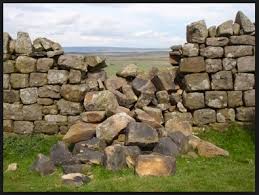
Nehemiah looks over the ruins of the city and now has to make the plan. He will be pushed and pulled over the next several weeks. There are daytime projects and nighttime projects. There are literally hundreds of epic-sized things that need to be done. Each one begs to be tackled first. Now, thousands and thousands of leaders have stood in those same shoes…overwhelming odds…stretched to their limits…asking themselves what task they should check off first…perhaps even asking themselves what they have gotten themselves into…perhaps debating walking away from the situation altogether. Nehemiah certainly felt the crushing weight of all those challenges. He stands looking at piles of stones. What once had been a thriving city, now looks like the living room floor after a two-year old obliterates the largest Lego kit ever seen by man. The city was now in a billion pieces. It would be so easy to walk away.

I can’t imagine.

Actually, I can. Nearly two years ago, an EF-4 tornado ripped through a community very near to us. I spent several days working cleanup in various neighborhoods that were hit. I remember walking through one, ending up in a section where the homes were all gone. This memory is lasered in my mind. I stood on this one particular property and was astonished that there was no evidence of a house ever being there, except for the basement that you could now look directly into. And then I walked over a slight ridge, and there were the remnants of what was probably several houses…in a billion pieces. I know what you’re thinking…“Really? A billion?” Yes, a billion. And now my job was to comb through those billion pieces to find a few keepsake items worth saving. It was overwhelming. I’m not ashamed to admit that I stood there and wept. I completely understand the psychological trauma of those who do this for a living. Where do you start? What pile do you attack first? So yeah, if you are not committed it’s easy to walk away.

Nehemiah doesn’t have that luxury though. If he doesn’t take it on, who will? Nobody has risen to the occasion. No one else raised their hand. No, Nehemiah is the one chosen by God to see it done. The walls, gates, enforcements, and residences…all of it…need rebuilt. Each project is a headache. So, Nehemiah does what a great leader does…pop some Tylenol and make a plan that prioritizes the problems that lay in front of him. He determines safety and security is priority number one and needs to be addressed immediately. So the walls and gates must come before anything else. No doubt there were those present that argued for their house to be rebuilt first. “Where am I supposed to lay down my head after a hard day’s work?” “I’ve given more than my share of offerings at the temple.” “Don’t you know who I am? I’m the mayor.” And on and on. That push and pull. But, what good would that be if the enemy could just walk right up and destroy it again. No, the walls and gates must be priority one. The Bible says, “So they strengthened their hands for the good work.”

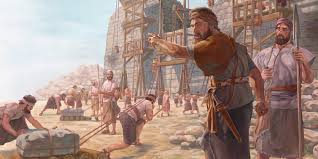
Nehemiah then creates teams of builders to get after the wall building and gate restoration. More on this next time, but it is important to note that leaders don’t just let people go off and do whatever feels good. No, leaders organize the crowd into teams skilled at the work that needs to be done. If not done this way, you end up with all your plumbers in one group working on HVAC systems, and your HVAC pros working on excavating trenches and pouring concrete. Utter chaos. Again, Nehemiah understands what needs to be done so he creates jobsite teams to get the work done. As the walls are rebuilt, gates are being restored. There were 10 of them around the city…the Sheep, Fish, Old, Valley, Dung (lol), Fountain, Water, Horse, East, and Muster. Each one had a specific purpose, and those working on them were skilled with understanding.

I will leave this here until next time, as we see Nehemiah move from the planning and organizing, to further strategizing. We will see that Nehemiah faced challenges that were more than inanimate brick and stone. He came up against flesh and blood opposition as well. Old Sanballat, Tobiah, Geshem…the three musketeers of discord. 

Midnight Rides and Car Keys

I remember when I enlisted in the Air Force and arrived at my first assignment, Altus Air Force, Oklahoma. I had been there a year or so, when my supervisor handed me a copy of the Professional Military Examination Study Guide. It was over 600 pages of information ranging from Air Force history, to command structure, to uniform standards, to military justice, to standards of conduct, and everything in between. One of the chapters dealt specifically with leadership, including development, philosophy, styles, etc. I will always remember the definition of leadership given in that book – very rudimentary. “The art of influencing others.” Two things come to my mind when I recall that definition. First, leadership is an art. It is intuitive, relies on human experiences. Second, “others” are involved. That simply means you need to understand that, as a leader, your words, your actions, your decisions affect the lives of others…and you better not take that lightly.

Quick recap from last week. We were introduced to Nehemiah, the cupbearer to the king. He finds out Jerusalem is in shambles and the people are living in horrible conditions. He asks, and is granted permission from the king, to travel to the city and rebuild it. So, he heads out, but not before obtaining letters signed by the king, giving him permission to traverse through the region without fear of attack. He also gets permission to requisition timber from the king’s forest to use in construction projects.

Nehemiah travels 900 miles from Shushan to Jerusalem. What would take us half a day in a car, took Nehemiah three months on a pack animal. Not a pleasant thought…or experience. Talk about a sore backside, and don’t get me started on the chafing. But he makes the journey, because the situation in Jerusalem demanded it. What happens next is where I want to camp out for this chapter.

Nehemiah arrives in Jerusalem (again, after a three-month journey) and absorbs what he sees before giving a single order. If you are in a leadership position, let that sink in for a moment. He arrives and takes some time…the Bible says three days…before making any kind of decision. This is strategic visioning at its finest. The worst thing a leader can do is show up with no understanding of what the situation is, and start giving orders to individuals to do this or that. It creates chaos. Great leaders observe before saying a word. That is what Nehemiah does. He shows up, spends three days praying and listening to the people that are actually living there, puts on his night-vision goggles, and takes a midnight ride through the city, scoping out the landscape and seeing where all the damage lay. Now, if you are not careful, you will overlook a few critical words in these verses that describe Nehemiah’s nighttime journey. Nehemiah, painting the scene, says, “Then I arose in the night, I and a few good men…. This is the second takeaway from this blog chapter. Great leaders surround themselves with a few trusted individuals. Preferably, those who have strengths that you do not have…that can see through your blind spots…that you can trust with your life. I worked for a two-star general during my time in the Pentagon, and he worked for the Chief of Staff of the Air Force…the number 1 guy. I remember my boss telling me that if General Welsh (the Chief of Staff at the time) showed up at his house in the middle of the night and needed his car keys, he would hand them over without thinking, no questions. I thought to myself…that is what absolute trust looks like. That is the kind people you need to surround yourself with…the kind that if they showed up at your door at 2:00 in the morning and asked to borrow your car, you would hand the keys over to them without thinking. A few good men. 

Last thing for this week. Nehemiah has gone out, again with a few good men (cannot emphasize this enough), and now he comes back and gives his report to the people. Nehemiah isn’t dumb. He knows he cannot take the task on by himself; he is going to need a lot of help. The moment is palpable. It is thick with anticipation. People have gathered, closing in around this mysterious guy who showed up a few days ago. Everyone is holding their breath. Nehemiah grabs the megaphone. “The city lies in waste, the gates are burned, and we are in great distress.” He accurately describes the scene…doesn’t sugarcoat it…presents the plan…and gets the buy-in from the people. Notice what their response was; “Let us rise up and build.” Also notice what their response wasn’t; “Who does this guy think he is? He can’t just waltz in and expect us to just do what he says.” No, they have been waiting for someone. Anyone. A leader who could figure out what needed to be done. A leader with authority. A leader with compassion. A leader able to see the vision of “what will be” in the midst of the “what it is now”. But, if you are like me, you might be asking yourself…Didn’t anyone already there have the ability to step up? I don’t know. Apparently not. I don’t know if every individual in the city was too busy feeling sorry for themselves, or if they were overwhelmed by the sheer destruction, or if they were spending every waking moment playing Call of Duty on their X-Box, plotting out their special ops mission to exact revenge on those who destroyed Jerusalem. Whatever they were focused on, it didn’t involve putting the city back together. So, Nehemiah does what no one else thinks of doing. After all, he is a leader with a plan…compassion…and a vision.

Midnight rides. They are not unique to Nehemiah and his small posse. Paul Revere ring a bell? William Dawes? Samuel Prescott? Young Samuel rode the same night Paul made that famous traverse across the countryside. While the more famous Revere was captured by British forces, Prescott got away by jumping his horse over a stone wall, riding on to warn the residents of Concord and beyond. Because of his not so famous ride through the night, the farmers and other residents armed up the militia and stopped the British advance. Knowing they were beat after intense fighting, the British retreated back to Boston. The rag-tag bunch had won the night…thanks to the little less known ride of Samuel Prescott. 

Want to know more about midnight riders? Check out my blog from January 27, 2022, titled “I’ve got to ride, ride like the wind.”  Until next time…

“Here, Try This” and Other Stories of a Cupbearer

The first principle to understanding how leadership works starts with yourself. I know this sounds basic, but you would be surprised how many people don’t consider this. In their head, they figure they are the most senior person, or the most experienced, or the alpha-dominant figure in the group…and that means they lead. But it doesn’t work like that. You will get nowhere if you don’t know who you are. Well, you’ll get somewhere…but you’ll get there alone. The rest of your team will be looking for someone else to follow.

Now, on that personal journey of discovering who you are, you also must uncover the answer to this most basic question…Why do you want to be in a position where, you are responsible not only for yourself, but for others as well? (I’ll explain in later segments why this cannot be because you think it brings prestige, or something to put on a resume.) 

So, I hope you join me on this journey of discovering what true leadership looks like through the converging paths of Nehemiah, the Old Testament hero who led the rebuilding of Jerusalem; and because we are celebrating our nation’s 250thbirthday, some of the early historical figures who shaped our country…the good, bad, and ugly. 

In this first one, let’s look at those two ideas more closely…finding who you are, and why it is you want to lead. Prepare for liftoff in 3…2…1

The Bible describes Nehemiah as the cupbearer to the king. I don’t know whether you appreciate what duties the cupbearer had in the king’s court, but he was a responsibility-laden individual who could not afford to make a mistake. You see, the cupbearer was the guy who made sure the king stayed healthy by eating and drinking every offering before the king partook. Most of us are in vocations where we are allowed to have moments where we don’t get it right. In Nehemiah’s case, that was not so. If he failed at tasting anything before being presented to the king, he could well lose his life. This was important because there was not a shortage of people who might want a king dead. Now, I must confess, there is absolutely no way I could do this job. The cook would bring out some fresh lobster, and I would be like, “Nope, I don’t eat that.” Then some brussels sprouts, “Not going to happen.” Liver. Me shaking my head. Tomato soup…Walking away. Curry…Laughing. Asparagus. “Next.” Then the wine would show up. Sample this red wine. “Negative ghost rider.” How about some white wine. “Put it back in the cellar”. We’d play this game for a thousand other dishes, and the answer would be the same…“That’s a big no, bro.” But Nehemiah did not have that luxury. What the king wanted to eat or drink, must go through Nehemiah first, figuratively, and literally.

One December day Nehemiah is going about his business as the cupbearer, when he hears that his fellow Israelites are in distress, and that Jerusalem lay in waste, walls crumbling, gates burned, homes and buildings destroyed. And his reaction is the same as yours if you were in his shoes. He was sad. So, he wept and mourned…for days. Actually, the Bible says many days. How many I don’t know. But I do know that four months later, he was still saddened by the tragic news, and worried that his emotions might show on his face. If he thought that he could hide the tear-soaked eyes from the king, he was wrong. The king immediately recognized that something was wrong with his faithful cupbearer. The king knows it is not allergy season, so there must be another reason Nehemiah’s eyes are blood-shot red.

Nehemiah had a choice to make right then. Lie, and tell the king that it was just a bad case of heartburn. Or tell the truth and hope for the best. And this is the first indication of who Nehemiah was – a truth teller. A real leader doesn’t lie to make things “convenient”. You’ve heard the expression that sometimes the truth is inconvenient. Not so. The truth is the truth. (And, by the way, there is also no “my truth” or “your truth”. There is the truth…and that is all.) The convenient or inconvenient aspect is purely a human deception we attach to it. Leaders are not focused on attaching some version of relativity to the truth, because as I said, the truth is the truth. So Nehemiah, although afraid at what the king might do to him, tells the ruler why he is sad. The king’s response tells of the great deal of respect he has for his cupbearer. He didn’t admonish Nehemiah and tell him to go back to taste-testing Whoppers and Big Macs (which is the kind of food I would want to eat as a cupbearer). No, the king asks, “What do you request?” The next thing Nehemiah does is pray. This serves to remind us of what Godly leaders do when confronted with an other-worldly-sized problem…pray.

Nehemiah knows himself. He knows he has what it takes to get this job done. He even knows the approximate timeframe it’s going to take…and he hasn’t even laid eyes on the project yet. That is someone who understands his abilities and what he is made of. Nehemiah also knows his “why”. He has compassion on those living in the ravaged city of Jerusalem, and wants to, once again, provide protection for them, by rebuilding the city walls. There are several enemies, as we will see in future segments, who want to continue to see Jerusalem lay in ruins. But Nehemiah is going to step up when no one else would. He will become the needed leader in a culture of uncertainty. There will be ups and downs, valleys and mountaintops. But it is the story of leadership, raw and unedited. Stay tuned…

Before I go though, in June 1775, George Washington sat before 47 other men. A different other-worldly-sized problem lay at hand. How to unite a bunch of farmers, teachers, blacksmiths, silversmiths, and other tradesmen, from 13 colonies, into a fighting force to repel a professional British army. Not many men could accomplish the task at hand. But the 47 seemed to be in agreement that the man of the hour was George Washington. He is a flawed man. He is a slaveholder. He is overly concerned with his personal reputation. He often, especially early on, fails to deploy the winning strategy. And yet, no one else seemed to be up to the challenge. Before accepting the role of commander, Washington knows that it is wrought with troubles and challenges, both internally and externally. It will take a considerably longer time to see his army gain victory over the British, than it took Nehemiah to rebuild the walls of Jerusalem, but both will happen. Nehemiah will lead his people in their difficult work, and Washington will do the same, for that is what a leader does.