Stones…Part 7

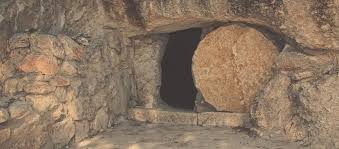
We come to the final chapter in the series of Biblical stone stories. For a recap, we have seen stones as pillows, altars, memorial pillars, giant-killing projectiles, judgement-passing tools, and potential tabernacle choirs. Now, we will see them in their Oscar deserving, albeit silent, role as best supporting actors…tomb sealers.

Our story starts about 2500 years ago. An 80-year-old man has refused to bow down to worldly government rules and now is going to pay the price. The officials want him out of the picture because they are jealous of the man and the attention he garners. They feel threatened by his existence. So, they plot against him, hoping to find some way to rub him out. 

All of these things happen to him because of who he was at the core. He was a servant of the Most High. He followed God’s direction rather than those around him. There certainly was something different about this man living in a world that was not his. You see, as a boy, he was taken captive by the Babylonian army and put into the king’s service. But instead of melding in with the crowd, and “going with the flow”, he stands up to the system, stays faithful to his calling. And it is this that eventually gets him in trouble.

Those who hated him were now petitioning the king to arrest him for not following the law. What law you ask? Well, it said that if anyone prayed to any god or man other than the king, for the next 30 days, that he or she would be cast into the lions’ den. The thing that stands out in this new law, was the fact that it was only in place for 30 days. If you were serious about not allowing anyone to pray to anyone but the king, you would make it a permanent law…not just for 30 days. But clearly, these officials were not interested in actually changing the law, only in getting the target of their wrath in trouble. And it worked.

The king, deeply saddened by what he allowed himself to be talked into, has no other choice than to arrest Daniel and have him sealed in what would presumptively be, his tomb. You see, and I’m sure you are already aware of this, there were ravishingly hungry lions waiting for him. So, the officials grab Daniel and throw him in and seal the opening with…the silent actor in our story…the stone. The next several hours paint a picture of perfect dichotomy. The king, safe and sound in his palace, was so troubled that he couldn’t eat nor sleep. He wanted no company, no nightly ritual of music. No DJ. No live band playing his favorite hit songs. No fantastical light shows. Just the king…sitting in profound sadness. On the other side of that stone, was Daniel. The one who should have been dreadfully afraid of his current situation, was just fine. We don’t know if he slept in those overnight hours. I believe he most likely was wide awake, praising God. Doubtful that he was partying like it was 1999, but one thing we do know though…he was at peace with praying when the law said he couldn’t. And when the king came running the next morning to roll away the stone, Daniel was just sitting on the floor, surrounded by lions who seem completely at home with a human in their midst. Darius yells into the cave to find out if he is still alive, and Daniel responds, “My God sent his angel and shut the lions’ mouths, so that they have not hurt me.”  Oh, yes; if only that cave-sealing stone could talk, what a story it would tell.

——————————

Our story continues about 2000 years ago. A 33-year-old man has refused to bow down to the worldly government and now is going to pay the price. The officials want him out of the picture because they are jealous of the man and the attention he garners. They feel threatened by his existence. So, they plot against him, hoping to find some way to rub him out.

This man, like Daniel, believed in following God’s direction rather than those around him. Like Daniel, he also prayed. A lot. He met people in their distress…in their struggles…in their sorrow…in their shame…in their sin. He healed. The leper. The blind. The lame. The deaf. The possessed. And he healed on a Monday. A Tuesday. A Friday. And yes, a Saturday…the Sabbath. This riled the religious zealots. There are a few recorded instances where Jesus heals on the Sabbath, but two of them highlight the Pharisees ridiculousness on a grand scale. Jesus heals a man’s hand in the synagogue. You just know the Pharisees are in the background setting him up. They probably sent the man to Jesus. But Jesus turns the tables on them and gives them a different scenario. If one of their sheep had fallen into a pit on a Sabbath, wouldn’t they lift it out, even on a Sabbath? Jesus is challenging them with the profound truth that a human is of much greater worth than a sheep. Yet it enrages the Pharisees. In another instance, a woman has suffered from what the Bible calls a spirit of infirmity. She is severely crippled, bent over with no ability to straighten herself up. Jesus heals her, and once again, the Pharisees have a meltdown. What comes out of their mouth next can only be described as an “out of touch with reality” statement…“There are six other days on which men ought to work; therefore come and be healed on them, and not on the Sabbath.” It would be laughable if it weren’t so infuriating. Jesus responds again by comparing what they would do for one of their animals on the Sabbath, all while neglecting their fellow human.

Fast forward a year or so, and Jesus is found guilty of fabricated charges, is beaten, killed on a cross, and put into a tomb. A tomb sealed with a stone. And those outside of Jesus’ tomb knew what those standing outside that lions’ den knew. The one inside was a goner. Neither audience believed for a moment that the occupant would come out of their stone-sealed home. But just like the stone over Daniel’s supposed-to-be tomb, the stone covering Jesus’ tomb had a story to tell. And if you thought the story of the stone covering the entrance of the lion’s den was incredible, prepare to have your mind blown. Inside Jesus’ tomb, something unfathomable happened. The once dead corpse begins to breathe. The pale skin begins to retain color. The blood that escaped his body through spike-induced holes in his wrists and feet, starts to flow through his veins once again. His eyes open and in a flash, Jesus is alive. Oh, yes; if only that tomb-sealing stone could talk, what a story it would tell.

——————————

A king ran to have the stone removed and found the man inside alive.

A man ran to have the stone removed and found the king missing.

One stone sealed in a man who refused to bow to the ways of the world.

One stone sealed in a man who came to save that world.

Stones…Part 6

Worship. Genuine worship. For the Christ-follower, there is nothing like it. It is unique. It is incomparable. It is an unmatched experience that can, and does, occur in a multitude of settings. In churches and cathedrals, of course. But also, in the open, in nature, in parking lots, in homes, on a mountain top. Worship, genuine worship has no limits, in any sense of the word. However, too many have come to think of worship as the 20 or 30 minutes in church before the pastor gets up and preaches. You know, the band is on stage, vocals hitting all the right notes (most of the time), drums, keyboards, and of course guitars, because they are the most important instrument (can you tell I am a guitar player?). We really have done a remarkable job of exchanging the unlimited for the limited. Maybe our perspective could change with the help of a certain inanimate object.

As Christians, we mark the time of the events in Luke 19 as the beginning of Holy Week. For Jesus, in the days and hours before this moment, he spent time traveling the countryside, interacting with a whole host of individuals, knowing that the time for his prophetic death was near. He met a wide range of people that week. There was the rich, young ruler, who was hindered from following Jesus by one thing…his possessions. There were the ten lepers who were healed; nine go along their way, with only one coming back, falling on his knees in thankful adoration. There was a man who begs for his sight to be restored, and Jesus fulfills the man’s request. And then there was Zacchaeus. You might remember him from the song you sang in children’s church, “Zacchaeus was a wee little man, and a wee little man was he; he climbed up in a sycamore tree, the Savior for to see.” (You didn’t read that line, you sang it, didn’t you?) I’m sure Zacchaeus wouldn’t be thrilled to know he is remembered as a wee little man, but I guess that is his lot in life.

Then Sunday comes. Jesus makes his final entrance into Jerusalem. The people, remembering the blind man, the lepers, and all the other individuals who found hope in Jesus, cry out with a loud voice, “Blessed is the King who comes in the name of the Lord! Peace in heaven and glory in the highest.” The significance of this cannot be overstated. The crowd is proclaiming Jesus to be the prophesied Messiah, sent by God, and now ready to set up his kingdom. People were ecstatic, jubilant, fired up, and for good reason. The one who was referenced centuries earlier, is now here. The Savior is on scene.

Now, with every celebration, there are those who refuse to join in. The curmudgeons, the sourpusses, the Debbie Downers, the pessimists. And in this case, it is the ol’ Pharisees…yes, those same guys who have been hounding Jesus since the beginning. They just keep popping up in the most “convenient” times. And on this day, they hear the crowd’s roar and are just not having it. The celebration has to end. The outpouring of emotions must cease. Whether it is jealousy or anger, they called on Jesus to quell the gathered masses, to shut them down, to pull the plug on this celebration. Actually, they tell Jesus to rebuke them, forbid them to yell out. Today, we might compare it to the police showing up at a loud house party and reprimanding everyone by writing them a ticket for disturbing the peace and then, sending them home. That is what the Pharisees are demanding of Jesus. Stop this nonsense.

You might be inclined to think what Jesus says next to be metaphorical. After all, what he suggests isn’t physically possible. It defies all reality. “I tell you that if these (the people) should keep silent, the stones would immediately cry out.” Surely the Pharisees were like, “LOL”, maybe even a few of them were, “ROTFL”. And I have to admit, at first glance it does seem rather humorous. Ridiculous even. Rocks glorifying the Rock of Salvation? Stones praising the Chief Cornerstone? Yes.

I don’t if Jesus meant it in a literal sense, or if he indeed meant it metaphorical. Before you find yourself on one side or the other, let me offer some thoughts. Maybe you will find yourself joining the Pharisees with your own “LOL” or “ROTFL”, or maybe you might start to believe that stones really could cry out. First, there is no doubt that Jesus was referring specifically to stones, real stones. The land around Jerusalem would have been full of them. I can see Jesus pointing to specific stones as he answers his detractors. Second, consider other improbable, nay, impossible things that occurred in scripture. Peter defies science and walks on water. Jesus goes against death itself and raises up Lazarus. Waters part. Mouths of lion held shut. Three guys walk out of a raging fire without so much as a scent of smoke on them. The blind receive sight. The crippled walk. At a word, storms cease. Thousands are fed with a couple of fish and a few loaves of bread. More than once. I could go on and on, but hopefully you get the picture. We accept without any second thought these miraculous events. Third, this is just a strange phrase for Jesus to use. Why wouldn’t he just tell the Pharisees that the people were free to worship or not. Why bring stones…these innocent, silent, bystanders…into the discussion? There were a thousand other things Jesus could have said here. And finally, if stones really don’t praise him and are just a representative picture of God’s creation that speaks (silently) to his praiseworthiness, then would not the stones be accomplishing this already? In other words, silence on the part of humanity is not a requirement of stones to magnify him. Yet, this is exactly what Jesus says…if man is silent, stones will not be.

 Let me add one last bit of clarification on this subject. I am not saying that stones will make audible human speech. I don’t know. But I do believe we would do well to remember the angelic proclamation to a virgin teenager when he tells her that she will give birth to the Savior of the world…“For with God, nothing will be impossible”.

Worship. Genuine worship. It will not be denied. It will occur. And stones may just have a bigger part than we could have ever imagined.

Stones…Part 5

Stones…part 5

Adultery. The Bible is pretty clear that this isn’t something that is acceptable. In fact, it was one of the first commandments given to Moses on Mount Sinai. Yet, somehow unsurprisingly, there are several such instances of infidelity located in the Bible. After all, it is filled with stories of people just like you and me. Of all the instances of marital unfaithfulness, perhaps the best-known example is David. 

It was springtime in Jerusalem…the flowers were just starting to bloom, lawns were turning green, birds were singing, bears were coming out of hibernation. And men were packing their gear up to go to war. All men, except David. For some reason, the guy who had once slain a giant when everyone else cowered in fear, felt that he was not needed on the battlefield with his army. Don’t miss that, because it marks the beginning of a chapter in his life where it spirals out of control. On one particular night, David is strolling the rooftop of his palace, looking down on his city, probably channeling his inner Batman. Then he sees her. Through a window. Bathing. In that one moment, David faces a crisis. The king, who should be with his army, instead is entertaining actions, that when acted upon, will send ripples through his reality. He sends for her, seduces her, impregnates her. That is bad enough, because you might remember it was mentioned several sentences above that adultery is an evil in the eyes of God. 

Now, if this were a poker game, we would describe David’s next action as going all in. He calls for Uriah, Bathsheba’s husband to return from the battlefield and spend some time with his bride, secretly hoping that they would be intimate so that it would look like he, Uriah, would be the father. But alas, plans don’t go David’s way, for Uriah refuses to sleep with his wife while his men were off fighting a war. In this moment, David could learn a thing or two from him. Instead, he has Joab, the commander of the army, put Uriah at the front lines, and then abandon him so that he was killed. God is displeased with David. How do I know? Because the Bible literally says, “The thing that David had done (sleeping with Bathsheba and the killing of Uriah) displeased the Lord.” The actual translation is meant to read that it was evil in the eyes of the Lord. Because of David’s actions of that one night, a whirlwind of disaster tears through his life. The son that was conceived, dies; another of David’s sons rapes his half-sister; one son kills another, David’s wives are captured and sexually assaulted; a son attempts to dethrone the king. It reads like a bad nightmare. And it was. Life was good for David until he chose fleshly desires over kingly responsibilities.

It’s springtime in Jerusalem. Again. But now, we have Jesus coming to the temple to teach. We don’t know what he taught on this particular day, but wouldn’t it be ironic if it was the selection where David encounters Bathsheba. I don’t know, but it would have made for a compelling centerpiece for what was about to transpire. For, suddenly the Pharisees were on scene with a woman caught in, of all things, adultery. Knowing how these religious leaders operated, they probably had her trapped in a holding pattern, waiting for just the right moment to challenge and embarrass Jesus. There are some suspicious facts surrounding this case that any detective worth his or her weight would easily discover. First, they tell Jesus that they caught this woman in “the very act” of adultery. Like, are you hiding in the closet, or under the bed? Perhaps, it was a sting operation, where one of the Pharisees put on a disguise and acted like an interested “client”. Perhaps it wasn’t a sting operation, and one of the Pharisees was the one with her…willingly. Second, they tell Jesus that the law of Moses required such a person to be stoned to death. Jesus knew what the law stated. And they knew that Jesus knew what the law stated. Third, these religious “experts” were ready to pass judgement without any kind of trial. If this sounds pretty sketchy, it’s because it was. So, this religious grandstanding was completely unnecessary. 

Here is a curious sidenote…I don’t know what it is about this account, but I think every time I hear it preached or taught, a picture is painted of this group of men circling Jesus and the woman, with stones at the ready, to pummel the victim. But you know what is missing from the actual scene? Stones. No Pharisee is balancing one on his shoulder like a shot-put thrower. No one has a stone raised above their head with a crazed look in their eyes. However, one thing you need to understand about the Pharisees though. They were a compelling bunch, and you better believe they were ready had Jesus said the word. The deadly arsenal was probably stacked outside the entrance to the temple. These guys did not care one iota about this woman…they just wanted Jesus out of the picture at any cost.

It was a no-win situation for Jesus. If he instructed the Pharisees to go ahead and stone her in accordance with the law, it made his message of mercy and forgiveness seem fake. If he told the Pharisees not to stone her, then they could say he was disregarding the Jewish law. They finally got him. The Son of God was going down with the ship. I can picture the Pharisees all looking at each other, winking, nodding, chuckling, pointing…then Jesus kneels to the ground…and does the most curious thing. He takes his finger and begins to write something in the dirt. Oh, how I wish we knew what he wrote. There has been a lot of speculation. Perhaps it was the sins of these Pharisees gathered around the woman. Perhaps it was a few words from the Law and Prophets. My favorite theory is that he began writing the names of women these Pharisees had adulterous relations with. I am certainly not saying that they were unfaithful, but they were hypocritical on so many other issues, so it would not surprise me if it was the same in this instance. Most of them were not what we would call upstanding citizens. In fact, Jesus would call some of these same men white-washed tombs…not a flattering expression. In any case, Jesus stands back up, looks at each of them, and says, “Whoever is without sin, throw the first stone.” And just so there was no mistaking the seriousness of the situation, he kneels back down and continues his message in the dirt. Maybe more names, maybe more sins. In any case, the Pharisees were guilt-ridden by their conscience, and one by one, walked away.

When Jesus stands back up, the wanna-be stone hurlers are gone. It is just him and the woman. “Where did everyone go? No one has condemned you?” Jesus asks. She replies, “No, my Lord.” I think it is curious that she calls Jesus, “Lord”. The Greek word is κύριος, or kurios, and it translates to God or master. This adulterous woman, a low life in the eyes of her accusers, recognizes what the self-righteous Pharisees failed to see. With no one left but the two of them, Jesus says, “I don’t condemn you either. Go and sin no more.” 

And with that, Jesus goes back to teaching those gathered in the temple. Again, I have no idea what text Jesus was reading from that day, but one thing I do know…the greatest lesson was not taught from that scroll, it was from the actions of a perfect, sinless Son of God to an imperfect, sinful woman. That was the lesson. Grace. Mercy. And stone-free forgiveness. 

Stones…Part 3

They come to the edge of the water and find themselves in what you would call a conundrum. The pursuing army is approaching from the rear, and the sea lies in front. But God, who has led the Israelites out of captivity, surely isn’t going to let them die here, is He? When the hopelessness of the situation seems apparent, the waves miraculously part, allowing them to walk across on dry land. The Israelites, who were once slaves in Egypt, are now free and headed to the land promised by God. And oh, how glorious it would have been had they just keep walking that straight line right into that land, because as everyone knows, “the shortest distance between two places is a straight line.” But alas, it was not to be so. They were a flawed people, and their sin kept that direct flight from happening. So instead, they had the longest layover in history…40 years. FORTY YEARS! I used to travel a lot for work, and I disliked any layover longer than 40 minutes. But 40 years? You have to be kidding me. However, actions and choices have consequences, and in this case, they were a tough pill swallow. Can you imagine just wandering around the same piece of land for 40 years? The Israelites were probably like, “Hey, Moses, didn’t we pass that same rock last week?” Or, “That looks like the same tree we walked past last month. I remember carving my initials into it.” (And then, upon checking said tree), “Yep, it’s the same one.”

It was tragic. On many levels. First up, Moses. He leads an ungrateful, narcissistic, unbelieving, disobedient group of people around for 40 years and doesn’t get to enter into the promised land, because he hits a rock when God says to simply speak to it. I get it. He was disobedient. But I have to be honest. If I’m leading this bunch around for this many years and constantly have to hear their whining about how it would have been better to stay in Egypt as slaves, I am pretty sure I would have done more than just hit a rock. Then there is Joshua and Caleb. You might remember that these two were the only ones who returned from the recon trip into the promised land, who believed they could enter in and win victory in battle. They were like the original special forces. They snuck in and back out without being detected. They believed the Lord would provide, and yet, because of everyone else’s unbelief, they suffered the same punishment of walking around for four decades. Or how about the innocent kids crawling around in diapers? What did they do, except to be conceived and born out of two parents who complained about eating the best take out meals anywhere. They would have some credibility had they been forced to consume Meals Ready to Eat (MREs) like deployed military personnel used to chow down on. And they would get bonus points for eating the old school egg MRE. Trust me when I say, you do not want to experience that.

But, nonetheless, here they are, wandering in the wilderness until one day, God says, “Time to move into your new home.” But it presents a challenge that they have seen before. Ahead of them, lies another body of water…and just like last time, there are no bridges. 

The plan this time is a little different than before. The priests carry the ark of the covenant into the water, and the waves, once again, miraculously part, leaving dry ground for the people to walk upon. (It’s a good thing the ark of the covenant is now in an old Army warehouse…you never know what people would do with it). God tells Joshua to have 12 men to each grab a stone from the middle of the dry riverbed. They will later take those 12 stones and build a monument.

This short account of what occurred following the crossing of the Jordan River, seems rather inconsequential. They stack 12 stones and move on with their next phase of life. But it’s the purpose of those 12 stones that matters. They will serve as a reminder of how the mighty hand of God dried up the river and brought the people into the new land. It was always meant to be a conversation starter. When the generation not yet born, would see the 12 stones, then the story of the divided waters, and of God’s provision, would be shared. 

So, here’s the deal…what moments do you have in your life that you will pass along to your children and their children? What stones tell a monumental story that will ultimately guide future generations? You might tell yourself that they are inconsequential, but you would be wrong. Every success…and failure. Every challenge fulfilled…and discarded. Every test passed…and botched. Every celebrated victory…and disastrous loss. Discover their purpose. Each stone put in its place is a story…your story. Now share that story. 

Fabula est vestri…the story is yours.

Stones…Part 2

Last time we saw Jacob he was making a deal (vow) with God, saying that if God took care of him, Jacob, in turn, would serve Him.

After anointing the stone, Jacob continues his travels to Uncle Laban’s house, and just before arriving, he meets Rachel, Laban’s daughter, as she is preparing to water her flock of sheep. If what happens next would occur today, there would be arrests, lawsuits, and all kinds of trouble. Jacob grabs her, kisses her, and lifts her up. I am picturing Patrick Swayze lifting Jennifer Grey in the air with the song I’ve Had the Time of My Lifeplaying in the background, but it probably didn’t go down like this. However it happened, Jacob is smitten, enamored, head over heels in love. So much so, that he wants her hand in marriage. But there is a problem. Rachel has an older sister, and well, I guess she wasn’t gorgeous like Rachel. I love the way The Messageputs it. “Leah had nice eyes, but Rachel was stunningly beautiful.” Jacob apparently wasn’t into eyes, because he wanted Rachel, who was, again, stunningly beautiful. Typical dude. Jacob and Laban enter into an agreement…Jacob will work for Laban for seven years in exchange for Rachel’s hand in marriage. They shake hands on the deal, and Jacob starts working that day.

I don’t know if you realized this, but the Bible is a time machine, because one verse, Genesis 29:20, covers the next seven years. It says, “Jacob worked seven years for Rachel. But it only seemed like a few days, he loved her so much.” I think we can all agree that there are periods of our lives when it feels like several years are over in a blink of an eye. If you have a child, you understand. Well, Jacob did his part, and it was now Laban’s turn to give Rachel’s hand in marriage. But he has other plans. Laban throws a huge party, and I can only assume Jacob had a little too much wine, and when it is “that” time for every groom’s favorite wedding night activity. Jacob is intimate with his bride. In the morning, imagine his surprise when, instead of Rachel lying next to him, it is Leah…you know, the one with nice eyes. I’m sure Jacob was furious. But Laban tells him that tradition dictated that younger daughters could not be wed before the older siblings. I wonder if Jacob thought in that moment of how he had tricked his father. The proverbial shoe was on the other foot. Jacob was now on the receiving end of a great deception. To smooth things over, Laban offers him the same deal for Rachel…work seven years and you can have her hand in marriage. I have to believe Jacob was like, “You don’t have any other daughter’s hidden away do you?” Apparently he doesn’t, and seven years (yes, one verse again) later, Jacob is married to Rachel.

As if these last 14 years haven’t been interesting enough, the next few are even more so. Jacob clearly loved Rachel more than Leah, but it was Leah who would start bearing children. Somehow Jacob balances time between the two, and Leah has a son, Reuben. Then another, Simeon. Then another, Levi. Then another, Judah. All this time, Rachel’s fury is building. So, she confronts her husband, “Give me children, or else I die.” Jacob claims he is doing his part, and in all honestly, it’s hard to argue that. Rachel then gives Jacob her maid to sleep with, in the pretense that it will be her (Rachel’s) child. It works and the maid gives birth to Dan. But Rachel needs to play catchup, so she tells the maid to sleep with Jacob again, and she bears another child, Naphtali. As if this soap opera of a story couldn’t get more bizarre, Leah is suddenly jealous (as if four sons weren’t enough). She now sends in her maid to bear more children on her behalf, because if Rachel can do it, so can she. And her maid bears a child, Gad. And then another, Asher.

Next level irony happens next. One day, Rachel is hungry and wants what Leah has. Leah trades the food to Rachel in exchange for permission to sleep with Jacob. (Again, I wonder if Jacob is reminded of his dirty dealings when he traded food with his brother in exchange for birthrights.) Leah is, once again, intimate with Jacob that night, and as a result, bears another child, Issachar. That recipe must have been mighty tasty to Rachel, because Leah gets pregnant again, bringing forth another son, Zebulun. Did I mention that food being delicious? It had to have been, for Leah has another “moment” with Jacob and bears a daughter, Dinah. Then Jacob sleeps with Rachel, and she gives birth to Joseph. I am beginning to wonder if these people have anything else to do.

The time comes for Jacob and his literal tribe to move on. He does, but not before some more conniving deception and trickery. You can read about that in Genesis 30. A lot happens to Jacob over the next few chapters. He runs from Laban, fearfully meets his brother Esau, his daughter is assaulted. Nothing good. And it certainly is not reflective of someone who promised to follow God. Nonetheless, God speaks to Jacob, “Go to Bethel.” Now, I believe in these past 20 years or so, God had been showing Jacob how it felt being on the receiving end of all the deception and wrongdoing of his earlier life.  And it was now time for Jacob to return to where he first met God…to where he placed that first stone. It was now time for phase 2 of construction at Bethel. The place needed an upgrade, so Jacob gathers more stones and builds an altar, and God once again meets him here, in the culmination of Jacob’s redemptive story.

Each stone placed in the creation of the Bethel altar, was a reminder of the times past. One stone here, Jacob’s mistreatment of Esau.  A stone there, dishonor of his father. Another stone in its place, manipulation of Laban. Stones for lying. Stones for loveless relationships. Stones for the lack of empathy. One by one, each stone is placed together to form the altar.  And one by one, each stone of Jacob’s past is broken down, dismantled, and destroyed. It took decades, but Jacob recognizes the God who sustained him through the ups and downs, saying, “God has fed me all my life long to this day”…reminiscent of the vow Jacob made during his first encounter with God at Bethel.

In the end, the grungy, despicable jerk, Jacob, is transformed into Israel, the guy who fathered an entire nation…stone by stone. Really digging into Jacob’s life this week, it has reminded me of the shortcomings in my own life. Times when I said I would do something…and didn’t. Times when I convinced myself I was telling the truth…and wasn’t. Times when I stayed busy…I didn’t want to face the reality of life’s challenges. This doesn’t even come close to scratching the surface of my inadequacies; however, the great news is I know a God who is way more powerful than any of my failings. In the end, all it takes is His voice telling me to drop all the stones of disappointment and despair, and to return to Bethel, where regretful choices meet redemptive love.