Stones…Part 5

Stones…part 5

Adultery. The Bible is pretty clear that this isn’t something that is acceptable. In fact, it was one of the first commandments given to Moses on Mount Sinai. Yet, somehow unsurprisingly, there are several such instances of infidelity located in the Bible. After all, it is filled with stories of people just like you and me. Of all the instances of marital unfaithfulness, perhaps the best-known example is David. 

It was springtime in Jerusalem…the flowers were just starting to bloom, lawns were turning green, birds were singing, bears were coming out of hibernation. And men were packing their gear up to go to war. All men, except David. For some reason, the guy who had once slain a giant when everyone else cowered in fear, felt that he was not needed on the battlefield with his army. Don’t miss that, because it marks the beginning of a chapter in his life where it spirals out of control. On one particular night, David is strolling the rooftop of his palace, looking down on his city, probably channeling his inner Batman. Then he sees her. Through a window. Bathing. In that one moment, David faces a crisis. The king, who should be with his army, instead is entertaining actions, that when acted upon, will send ripples through his reality. He sends for her, seduces her, impregnates her. That is bad enough, because you might remember it was mentioned several sentences above that adultery is an evil in the eyes of God. 

Now, if this were a poker game, we would describe David’s next action as going all in. He calls for Uriah, Bathsheba’s husband to return from the battlefield and spend some time with his bride, secretly hoping that they would be intimate so that it would look like he, Uriah, would be the father. But alas, plans don’t go David’s way, for Uriah refuses to sleep with his wife while his men were off fighting a war. In this moment, David could learn a thing or two from him. Instead, he has Joab, the commander of the army, put Uriah at the front lines, and then abandon him so that he was killed. God is displeased with David. How do I know? Because the Bible literally says, “The thing that David had done (sleeping with Bathsheba and the killing of Uriah) displeased the Lord.” The actual translation is meant to read that it was evil in the eyes of the Lord. Because of David’s actions of that one night, a whirlwind of disaster tears through his life. The son that was conceived, dies; another of David’s sons rapes his half-sister; one son kills another, David’s wives are captured and sexually assaulted; a son attempts to dethrone the king. It reads like a bad nightmare. And it was. Life was good for David until he chose fleshly desires over kingly responsibilities.

It’s springtime in Jerusalem. Again. But now, we have Jesus coming to the temple to teach. We don’t know what he taught on this particular day, but wouldn’t it be ironic if it was the selection where David encounters Bathsheba. I don’t know, but it would have made for a compelling centerpiece for what was about to transpire. For, suddenly the Pharisees were on scene with a woman caught in, of all things, adultery. Knowing how these religious leaders operated, they probably had her trapped in a holding pattern, waiting for just the right moment to challenge and embarrass Jesus. There are some suspicious facts surrounding this case that any detective worth his or her weight would easily discover. First, they tell Jesus that they caught this woman in “the very act” of adultery. Like, are you hiding in the closet, or under the bed? Perhaps, it was a sting operation, where one of the Pharisees put on a disguise and acted like an interested “client”. Perhaps it wasn’t a sting operation, and one of the Pharisees was the one with her…willingly. Second, they tell Jesus that the law of Moses required such a person to be stoned to death. Jesus knew what the law stated. And they knew that Jesus knew what the law stated. Third, these religious “experts” were ready to pass judgement without any kind of trial. If this sounds pretty sketchy, it’s because it was. So, this religious grandstanding was completely unnecessary. 

Here is a curious sidenote…I don’t know what it is about this account, but I think every time I hear it preached or taught, a picture is painted of this group of men circling Jesus and the woman, with stones at the ready, to pummel the victim. But you know what is missing from the actual scene? Stones. No Pharisee is balancing one on his shoulder like a shot-put thrower. No one has a stone raised above their head with a crazed look in their eyes. However, one thing you need to understand about the Pharisees though. They were a compelling bunch, and you better believe they were ready had Jesus said the word. The deadly arsenal was probably stacked outside the entrance to the temple. These guys did not care one iota about this woman…they just wanted Jesus out of the picture at any cost.

It was a no-win situation for Jesus. If he instructed the Pharisees to go ahead and stone her in accordance with the law, it made his message of mercy and forgiveness seem fake. If he told the Pharisees not to stone her, then they could say he was disregarding the Jewish law. They finally got him. The Son of God was going down with the ship. I can picture the Pharisees all looking at each other, winking, nodding, chuckling, pointing…then Jesus kneels to the ground…and does the most curious thing. He takes his finger and begins to write something in the dirt. Oh, how I wish we knew what he wrote. There has been a lot of speculation. Perhaps it was the sins of these Pharisees gathered around the woman. Perhaps it was a few words from the Law and Prophets. My favorite theory is that he began writing the names of women these Pharisees had adulterous relations with. I am certainly not saying that they were unfaithful, but they were hypocritical on so many other issues, so it would not surprise me if it was the same in this instance. Most of them were not what we would call upstanding citizens. In fact, Jesus would call some of these same men white-washed tombs…not a flattering expression. In any case, Jesus stands back up, looks at each of them, and says, “Whoever is without sin, throw the first stone.” And just so there was no mistaking the seriousness of the situation, he kneels back down and continues his message in the dirt. Maybe more names, maybe more sins. In any case, the Pharisees were guilt-ridden by their conscience, and one by one, walked away.

When Jesus stands back up, the wanna-be stone hurlers are gone. It is just him and the woman. “Where did everyone go? No one has condemned you?” Jesus asks. She replies, “No, my Lord.” I think it is curious that she calls Jesus, “Lord”. The Greek word is κύριος, or kurios, and it translates to God or master. This adulterous woman, a low life in the eyes of her accusers, recognizes what the self-righteous Pharisees failed to see. With no one left but the two of them, Jesus says, “I don’t condemn you either. Go and sin no more.” 

And with that, Jesus goes back to teaching those gathered in the temple. Again, I have no idea what text Jesus was reading from that day, but one thing I do know…the greatest lesson was not taught from that scroll, it was from the actions of a perfect, sinless Son of God to an imperfect, sinful woman. That was the lesson. Grace. Mercy. And stone-free forgiveness. 

Stones…Part 4

You flea-bitten varmint! So goes one of Yosemite Sam’s favorite insults hurled at Bugs Bunny during many of my childhood Saturday morning cartoons. I also think it would have been the sort of thing Goliath would have yelled across the valley at the gathered Israelite army. Now picture this…a guy, nearly 10 feet tall, whose armor weighed over 130 pounds, carrying a spear with a 16 pound iron tip…this guy was a warrior’s warrior. He was a beast. And every day…twice a day in fact…he would walk out in front of the enemy and make the challenge. For forty days, the same giant, the same arrogance, the same boastful words, the same challenge…mono y mono. Me against your best…for all the marbles. Let’s get one thing clear, Goliath wasn’t worried about losing against these flea-bitten varmints. But oh, what an effect it had on the Israelites. Imagine you are a soldier in that army. Day after day you are ridiculed. Day after day you are told you are weak. Day after day you are called a coward, and the truth is, you pretty much are. But who could blame you? I mean, as I have already said, Goliath is a monstrosity of a man.

And it seems as if the torment will just go on and on. No end in sight. The two sides are at a standstill. It’s the trench warfare without the trench. Each day the Israelite soldiers come to the edge of their side of the mountain, hurl insults at the Philistines. The Philistines then come out of their tents on their side of the mountain, and hurl insults back. Then Goliath shows up, and the Israelites run away and hide. It is this way for, as I said, 40 days. 

But then the hype music starts. If you have ever watched the beginning of a college football game as the team gets ready to come on the field, you know what I’m talking about. Bells start bonging. Then the guitar riff. Drums come in. AC/DC cranked to 11 on the house system. Strobe lights are going off. The fog machine is doing its thing. And out of the tunnel comes the undisputed heavyweight Israeli champion, with his record of 27-0, with 25 KOs. The crowd goes wild. It’s about to go down…except, none of that actually happened. There is no music. There is no champion. Israel has no secret weapon. Instead, a teenage boy walks into the scene. He is the youngest son of Jesse, who had already sent three of his other sons to join the army. Jesse now wants an update on how things are going so he sends David. He is present when Goliath comes out and gives his daily challenge, and David starts asking questions, leading up to the moment when he tells Saul, the king, that he will go fight the giant. Saul’s response is the same one we would give if David was standing in front of us. Between bouts of uncontrolled laughter, Saul gets four words out…“You are too small.” But then, after David makes his convincing argument that he could do it, Saul tells him to go ahead, but not before giving his armor to the shepherd boy. Well, of course it doesn’t fit, so he takes it off, and instead grabs his staff, and heads to the battlefield.

Along the way, he stops at the river, and grabs five stones, for these will be his weapon, along with the sling in his hand. He approaches the giant and the two begin verbally sparring. Goliath insists that he is going to feed David’s body to the animals. David, on the other hand, is thinking way bigger. He replies that the Lord will deliver the victory to the Israelites, and the beasts of the field will dine on the entire Philistine army. With the talking done, it was time to get down to business. They trade Mr. Universe poses, do several sets of one-handed push-ups and burpees, and…ok, that didn’t happen either. But I do love how 1 Samuel 17:48 describes what happens next…David runs to meet Goliath. Not walk, not a casual Sunday stroll…no, he ran. The confidence he has in what is about to happen is a lesson we could all learn. David reaches in his bag, pulls out a stone, places it in the sling, and starts spinning it around, gathering centripetal force energy, until the moment he releases the cord. The stone flies and hits Goliath right in the forehead, causing him to face plant into the ground. David then ran over and took the giant’s sword and killed him. The arrogant Philistine, who was so certain he would win in battle, died by his own sword.

One final word…you remember David took five stones from the river. He only used one, so did David not trust God enough that it would only take one stone? If so, why take five? There is widespread commentary on this. Goliath had four brothers, though some texts refer to “sons of Goliath.” Either way, there were five of them. And it is not a stretch to think that the remaining four would defend Goliath’s death and come after David. Think about what you would do if someone harmed one of your loved ones. So, the other four stones were not in case David missed. They were intended for four additional targets. That…is God-driven, stone-cold confidence.

Stones…Part 3

They come to the edge of the water and find themselves in what you would call a conundrum. The pursuing army is approaching from the rear, and the sea lies in front. But God, who has led the Israelites out of captivity, surely isn’t going to let them die here, is He? When the hopelessness of the situation seems apparent, the waves miraculously part, allowing them to walk across on dry land. The Israelites, who were once slaves in Egypt, are now free and headed to the land promised by God. And oh, how glorious it would have been had they just keep walking that straight line right into that land, because as everyone knows, “the shortest distance between two places is a straight line.” But alas, it was not to be so. They were a flawed people, and their sin kept that direct flight from happening. So instead, they had the longest layover in history…40 years. FORTY YEARS! I used to travel a lot for work, and I disliked any layover longer than 40 minutes. But 40 years? You have to be kidding me. However, actions and choices have consequences, and in this case, they were a tough pill swallow. Can you imagine just wandering around the same piece of land for 40 years? The Israelites were probably like, “Hey, Moses, didn’t we pass that same rock last week?” Or, “That looks like the same tree we walked past last month. I remember carving my initials into it.” (And then, upon checking said tree), “Yep, it’s the same one.”

It was tragic. On many levels. First up, Moses. He leads an ungrateful, narcissistic, unbelieving, disobedient group of people around for 40 years and doesn’t get to enter into the promised land, because he hits a rock when God says to simply speak to it. I get it. He was disobedient. But I have to be honest. If I’m leading this bunch around for this many years and constantly have to hear their whining about how it would have been better to stay in Egypt as slaves, I am pretty sure I would have done more than just hit a rock. Then there is Joshua and Caleb. You might remember that these two were the only ones who returned from the recon trip into the promised land, who believed they could enter in and win victory in battle. They were like the original special forces. They snuck in and back out without being detected. They believed the Lord would provide, and yet, because of everyone else’s unbelief, they suffered the same punishment of walking around for four decades. Or how about the innocent kids crawling around in diapers? What did they do, except to be conceived and born out of two parents who complained about eating the best take out meals anywhere. They would have some credibility had they been forced to consume Meals Ready to Eat (MREs) like deployed military personnel used to chow down on. And they would get bonus points for eating the old school egg MRE. Trust me when I say, you do not want to experience that.

But, nonetheless, here they are, wandering in the wilderness until one day, God says, “Time to move into your new home.” But it presents a challenge that they have seen before. Ahead of them, lies another body of water…and just like last time, there are no bridges. 

The plan this time is a little different than before. The priests carry the ark of the covenant into the water, and the waves, once again, miraculously part, leaving dry ground for the people to walk upon. (It’s a good thing the ark of the covenant is now in an old Army warehouse…you never know what people would do with it). God tells Joshua to have 12 men to each grab a stone from the middle of the dry riverbed. They will later take those 12 stones and build a monument.

This short account of what occurred following the crossing of the Jordan River, seems rather inconsequential. They stack 12 stones and move on with their next phase of life. But it’s the purpose of those 12 stones that matters. They will serve as a reminder of how the mighty hand of God dried up the river and brought the people into the new land. It was always meant to be a conversation starter. When the generation not yet born, would see the 12 stones, then the story of the divided waters, and of God’s provision, would be shared. 

So, here’s the deal…what moments do you have in your life that you will pass along to your children and their children? What stones tell a monumental story that will ultimately guide future generations? You might tell yourself that they are inconsequential, but you would be wrong. Every success…and failure. Every challenge fulfilled…and discarded. Every test passed…and botched. Every celebrated victory…and disastrous loss. Discover their purpose. Each stone put in its place is a story…your story. Now share that story. 

Fabula est vestri…the story is yours.

Stones…Part 2

Last time we saw Jacob he was making a deal (vow) with God, saying that if God took care of him, Jacob, in turn, would serve Him.

After anointing the stone, Jacob continues his travels to Uncle Laban’s house, and just before arriving, he meets Rachel, Laban’s daughter, as she is preparing to water her flock of sheep. If what happens next would occur today, there would be arrests, lawsuits, and all kinds of trouble. Jacob grabs her, kisses her, and lifts her up. I am picturing Patrick Swayze lifting Jennifer Grey in the air with the song I’ve Had the Time of My Lifeplaying in the background, but it probably didn’t go down like this. However it happened, Jacob is smitten, enamored, head over heels in love. So much so, that he wants her hand in marriage. But there is a problem. Rachel has an older sister, and well, I guess she wasn’t gorgeous like Rachel. I love the way The Messageputs it. “Leah had nice eyes, but Rachel was stunningly beautiful.” Jacob apparently wasn’t into eyes, because he wanted Rachel, who was, again, stunningly beautiful. Typical dude. Jacob and Laban enter into an agreement…Jacob will work for Laban for seven years in exchange for Rachel’s hand in marriage. They shake hands on the deal, and Jacob starts working that day.

I don’t know if you realized this, but the Bible is a time machine, because one verse, Genesis 29:20, covers the next seven years. It says, “Jacob worked seven years for Rachel. But it only seemed like a few days, he loved her so much.” I think we can all agree that there are periods of our lives when it feels like several years are over in a blink of an eye. If you have a child, you understand. Well, Jacob did his part, and it was now Laban’s turn to give Rachel’s hand in marriage. But he has other plans. Laban throws a huge party, and I can only assume Jacob had a little too much wine, and when it is “that” time for every groom’s favorite wedding night activity. Jacob is intimate with his bride. In the morning, imagine his surprise when, instead of Rachel lying next to him, it is Leah…you know, the one with nice eyes. I’m sure Jacob was furious. But Laban tells him that tradition dictated that younger daughters could not be wed before the older siblings. I wonder if Jacob thought in that moment of how he had tricked his father. The proverbial shoe was on the other foot. Jacob was now on the receiving end of a great deception. To smooth things over, Laban offers him the same deal for Rachel…work seven years and you can have her hand in marriage. I have to believe Jacob was like, “You don’t have any other daughter’s hidden away do you?” Apparently he doesn’t, and seven years (yes, one verse again) later, Jacob is married to Rachel.

As if these last 14 years haven’t been interesting enough, the next few are even more so. Jacob clearly loved Rachel more than Leah, but it was Leah who would start bearing children. Somehow Jacob balances time between the two, and Leah has a son, Reuben. Then another, Simeon. Then another, Levi. Then another, Judah. All this time, Rachel’s fury is building. So, she confronts her husband, “Give me children, or else I die.” Jacob claims he is doing his part, and in all honestly, it’s hard to argue that. Rachel then gives Jacob her maid to sleep with, in the pretense that it will be her (Rachel’s) child. It works and the maid gives birth to Dan. But Rachel needs to play catchup, so she tells the maid to sleep with Jacob again, and she bears another child, Naphtali. As if this soap opera of a story couldn’t get more bizarre, Leah is suddenly jealous (as if four sons weren’t enough). She now sends in her maid to bear more children on her behalf, because if Rachel can do it, so can she. And her maid bears a child, Gad. And then another, Asher.

Next level irony happens next. One day, Rachel is hungry and wants what Leah has. Leah trades the food to Rachel in exchange for permission to sleep with Jacob. (Again, I wonder if Jacob is reminded of his dirty dealings when he traded food with his brother in exchange for birthrights.) Leah is, once again, intimate with Jacob that night, and as a result, bears another child, Issachar. That recipe must have been mighty tasty to Rachel, because Leah gets pregnant again, bringing forth another son, Zebulun. Did I mention that food being delicious? It had to have been, for Leah has another “moment” with Jacob and bears a daughter, Dinah. Then Jacob sleeps with Rachel, and she gives birth to Joseph. I am beginning to wonder if these people have anything else to do.

The time comes for Jacob and his literal tribe to move on. He does, but not before some more conniving deception and trickery. You can read about that in Genesis 30. A lot happens to Jacob over the next few chapters. He runs from Laban, fearfully meets his brother Esau, his daughter is assaulted. Nothing good. And it certainly is not reflective of someone who promised to follow God. Nonetheless, God speaks to Jacob, “Go to Bethel.” Now, I believe in these past 20 years or so, God had been showing Jacob how it felt being on the receiving end of all the deception and wrongdoing of his earlier life.  And it was now time for Jacob to return to where he first met God…to where he placed that first stone. It was now time for phase 2 of construction at Bethel. The place needed an upgrade, so Jacob gathers more stones and builds an altar, and God once again meets him here, in the culmination of Jacob’s redemptive story.

Each stone placed in the creation of the Bethel altar, was a reminder of the times past. One stone here, Jacob’s mistreatment of Esau.  A stone there, dishonor of his father. Another stone in its place, manipulation of Laban. Stones for lying. Stones for loveless relationships. Stones for the lack of empathy. One by one, each stone is placed together to form the altar.  And one by one, each stone of Jacob’s past is broken down, dismantled, and destroyed. It took decades, but Jacob recognizes the God who sustained him through the ups and downs, saying, “God has fed me all my life long to this day”…reminiscent of the vow Jacob made during his first encounter with God at Bethel.

In the end, the grungy, despicable jerk, Jacob, is transformed into Israel, the guy who fathered an entire nation…stone by stone. Really digging into Jacob’s life this week, it has reminded me of the shortcomings in my own life. Times when I said I would do something…and didn’t. Times when I convinced myself I was telling the truth…and wasn’t. Times when I stayed busy…I didn’t want to face the reality of life’s challenges. This doesn’t even come close to scratching the surface of my inadequacies; however, the great news is I know a God who is way more powerful than any of my failings. In the end, all it takes is His voice telling me to drop all the stones of disappointment and despair, and to return to Bethel, where regretful choices meet redemptive love.

Stones…Part 1

Stones. I’m not really sure what caused me to start thinking about them and their relevance in the Bible. I was just sitting around several days ago and the thought came to me. That’s usually how these blogs start. A random thought becomes an inspiration to me, and sometimes that thought won’t leave me alone until I sit down at the computer and hammer out some words. It can be a blessing…and a curse. At 2:37 AM I’m not in the mood to get up and type, but if I don’t, it generally means I’m not going back to sleep. 

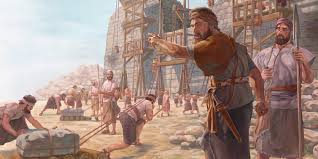
Anyway, stones. In the next few weeks, I am traveling back in time and looking at some of the pivotal moments where stones played a central part of God’s story. And our story. 

Stones.  Part 1

He’s not that different from you and me. And even though we wag our judgmental finger at him, if we are honest there are times when we are no better. Which makes Jesus’ sacrifice, mercy, and forgiveness even sweeter. But Jesus’s story is for another day. Today it is Jacob we are looking at.  We start in this chapter of his life where things are quickly spiraling out of control. The bad son, and even worse brother…the conniving, birth-right taking, blessing stealing, son of Isaac, packs his suitcase, flees the family farm, and heads toward the land of his mother’s family. What choice does he have? He has burned pretty much every bridge at home. His brother Esau hates him…wants him dead to be exact. He lied to his dad, so that relationship is on shaky ground. His mother is the sole standout. She tells Jacob to leave. Jacob heeds the advice of the one person on his side, and leaves. The Bible says he eventually came to a certain place, and because he was tired, he decided to spend the night. Four decades earlier Abraham came to this same place and had his own encounter with God. So, there was something special about this location. But this was not a Sandals Resort. There were no swim up bars, or a perfect beach setting with crystal clear water. Just an indiscriminate town, and Jacob is tired of walking, so he lays down. But he needs a pillow. And since he forgot his posture-pedic, feather-stuffed one back home, he grabs the nearest thing he could lay his head on. Now, let me interject something here. If you’ve ever served in the military and been deployed to Iraq, Afghanistan, or any of the other “stans”, you know that lugging your gear around for hours, from one place to another, and then being told to go wait with that large group over there, you get tired. You sit down and anything and everything becomes comfortable, including the stone you decide to use as a resting spot for your head. Nothing new here…Jacob did the same thing thousands of years ago.

In no time, Jacob is sound asleep…probably snoring like nobody’s business. And then he dreamed. A strange dream about a ladder and angels. Then there was a message from God; the land he slept on was going to be his. Jacob recognized the importance of the dream (who wouldn’t?), so when he woke up the next morning, he did what any person on the run from a murderous brother would do…he took the very same stone he had laid his head on, and set it up as a memorial, calling this plot of land Bethel (house of God). Don’t miss the significance of this –  

God – the holy, the perfect, the all-knowing, the mighty, the ever-lasting, meets Jacob – the terrible twin, the shameful son, the characterless coward. 

Now God, being who God is, begins to refashion Jacob. The process will take more than 20 years, but the dad deceiver and con artist on the lam, will eventually become a nation’s father, one chosen by God. Jacob, the supplanter becomes Israel, the God wrestler. 

Let me bring this to a close. Here, in this place, Jacob consecrated it by pouring oil over the stone and establishing Bethel as the first step in his redemptive story. As he prepares to leave, Jacob makes a vow with God that most of us have said or at least thought. It went something like this: If you save me, and give me what I want, you will be my God. We might say it this way – God, if you get me out of this mess that I am in, I will follow you.

For Jacob, this won’t be his last visit to this stone. He will see it again. And…cliffhanger alert…you won’t believe what he does just before his return. 

Suicide is…definitely not…painless

Suicide is painless.  So the lyrics go to the song that has long been attached to the television show M*A*S*H.  If you are not familiar with the show, you are proof that aliens do exist and have come to Earth.  Seriously, who has never seen at least one episode of the show that ran 11 seasons?  Now, if you are like me and have seen the show countless times, you are scratching your head and saying, “Dude, I don’t remember any words to that song that plays as the opening credits are displayed.”  And you know what?  You would be right.  There are no words that are being sung.  A quick search on this amazing thing they call the internet told me the producers used an instrumental version because the words were to too morbid and dark.  It’s true.  They are.  But the oft-repeated line, “suicide is painless”…IS. A. LIE.  It is not painless.  In fact, the entire song is one giant, depressed, mess.  If that is what the songwriter was going for, he nailed it.  

Here is the truth.  Suicide is not painless.  Not even a little.  It leaves a hole.  A chasm.  A canyon so immense it makes the Grand Canyon look like a crack in the sidewalk.  I know this firsthand.  I’ve had people in my life listen to the lie that there was no other option than ending their existence.  They believed there was no hope…no reason to keep fighting…and no one would miss them if they were not around.  They would just disappear in a painless act.  I want to reiterate – it is all a lie.  It is excruciating to be present in the aftermath of the biggest tragedy in our world.  

So, the million-dollar question then is, how do we stop someone from believing the lie?  I cannot begin to tell you how many times leaders in the military spent untold amounts of money on programs designed to end suicide.  Every time, I would tell my team that no program was going to make any substantial difference in combatting this scourge.  You can spend billions, create a thousand programs, send everyone to weeks-long training…and none of it will matter.  That itself is a depressing and sobering statement…but it is the truth, because there is nothing warm-blooded about a program.  There is no human connection with looking at a hundred PowerPoint slides.  At 2:38 in the morning, on a Tuesday, in March, none of that is going to matter.  What’s going to make a difference is if that person in the wee hours of the morning has someone willing to be present with them in that moment. I wrote a couple of weeks ago that it is imperative that we not let those walking in their valley of doubt, despair, and dare I add, death, walk it alone.  There is strength in numbers.  It has always been that way.  I love The Message translation’s of Ecclesiastes 4:12, “By yourself you’re unprotected.  With a friend you can face the worst.  Can you round up a third?  A three-stranded rope isn’t easily snapped.”  Did you get that?  “With a friend you can face the worst.”  Tell me anything that is worse than suicide-inducing depression.  But it can be defeated with a fellow traveler.  And when there are three?  The bond is strengthened even more.

I was watching the Marvel movie Thunderbolts today.  I am one of those who takes several months to get around to watch a new movie.  Obviously, it is not a new movie anymore…been out for months.  Again, that is just how I am.  But maybe today was meant to be the day I watched it.  You see, I started writing this blog several days ago and decided to let it breathe for a while before returning to it.  So, I am watching the movie and this part occurs that perfectly wraps up what I am trying to say.  To set the scene, there is a former Russian assassin, Yelena, who earlier in the movie, had reflected on her life and felt she had no purpose.  She was alone and desperate for something.  She has now met Bob.  Bob was a guy who just wanted to make it to the next drug high.  He found some people who promised that but then did some experiments on him that changed him into someone with unlimited powers.  The problem with Bob was that he suffered from loneliness, doubt, depression and all kinds of other mental health crises.  Earlier in the movie, Bob asked Yelena how one deals with those feelings of self-doubt, loneliness, and depression.  Yelena tells him that you just bury those thoughts deep down inside yourself.  It was a lie, and Yelena knew it.  But it is what she had always done.  But now, Bob’s dark alter ego is consuming the city into darkness, and threatening the existence of everyone… and we come to this scene.  

Yelena: What I said to you before was wrong, Bob.  You can’t stuff it down.  You can’t hold it in, all alone.  No one can.  We have to let it out.  We have to spend time together.  And even if it doesn’t make the emptiness go away, I promise you it will feel lighter.

Bob:  How do you know?

Yelena:  Because it already has for me.  We can find a way out of here together.  Will you try and leave here with me?

OMG, I never expected anything of substance to come out of a superhero movie.  It’s just entertainment.  You can put a Marvel movie on and just vegetate for two and a half hours.  But this one hit hard, like a knockout upper cut to the jaw.  This one scene encapsulates it perfectly. Togetherness.  You see, that is the point.  We cannot just stuff it down.  No amount of sheer willpower is going to make it disappear.  There is no magic red or blue pill we can take to alter this reality.  We all need each other to find a way out of the darkness together.  So, today, be a Yelena in someone’s life.  And while you are at it, find a Yelena to be in your life… because – by yourself you’re unprotected.  With a friend you can face the worst.  

Doe a Deer

Forrest Gump     Star Wars: A New Hope        Jaws…

These are some of the movies that, whenever they come on TV, I have to watch.  I don’t know how many times I have seen each of these masterpieces, but they number in the dozens.  And for the record, I am terrified of swimming in anything that is not a pool, for fear of getting attacked by a great white shark.  I know, I know, they don’t live in lakes, but don’t try and convince me of that, because it won’t work.  They are there.  My other favorites come around at Christmas.  The holiday season is like groundhog day in our house.  I must see several of the same movies every year, and in some instances, if it is on more than once, I may or may not watch it multiple times.  These include the The Sound of Music (yes, you read that correctly, because how else are you going to know the names of the musical notes; and where else are you going to see a bunch of children running around in hilly pastures wearing clothes that used to be curtains), Charlie Brown Christmasand the holiday show of all shows The Year Without a Santa Claus.  For weeks, everywhere I go I have the Heat/Snow Miser song in my head…it’s awesome.  At least that is what I tell myself.  There is one other Christmas movie that is required viewing in our house…It’s a Wonderful Life.  It is a great movie.  I know there are lines of people who would disagree with me…they are wrong, I am right.

In spite of the greatness of the story, the thing that has always bothered me about this movie, though, was the ending.  What happened to George and his family?  Did they move from that drafty, old house?  You know, the one with the wooden finial on the stairs that always pulled off whenever George grabbed it.  What happened to the grumpy, old Mr. Potter?   Was he ever arrested for stealing the Bailey Savings and Loan’s money?  And speaking of the old Savings and Loan building…did George continue working there?  Did he ever decide to travel the world?  As you can see, I have a lot of questions, and no answers.  So, I have to hypothesize.  The ending in my head goes like this.  All of George’s friends and family gave him a lot of money and bailed him out, as is witnessed in the movie.  Potter is arrested, found guilty, and sentenced to 5-10 years.  His employer that showed him the growing neighborhood of homes being financed by George’s bank is the star witness for the prosecution.  George does do some traveling around the world with his family, but then always returns to Bedford Falls and the Bailey Savings and Loan, because it is here that he can do his best work…helping people.  Supporting the small community.  Just ask Violet, the highly questionable young lady, who George helped by giving her money to leave town, leading to Mr. Potter threating to spread the rumor that George and Violet were having a fling together.

But Violet isn’t the only one George helped.  There is the Martini family.  George financed his mortgage when crusty old Potter refused.  And of course, all of the individuals at the Savings and Loan who show up when the stock market crashes, including little, old Ms. Davis who only wants a few dollars to get by.  You see, George made it a habit to help those in need, and in the end, they showed up big time to repay his kindness.  You may know a George Bailey.  You would be counted as blessed to have one in your life.  Someone who would give you the shirt off their back.  They would break down every obstacle to get to the person in need.

“I was hungry and you fed me.  I was thirsty and you gave me a drink.  I was homeless and you gave me a room.  I was shivering and you gave me clothes.  I was sick and you stopped by to visit.  I was in prison and you came to me.”  These words are a gut punch.  People in  these situations are desperate for someone to give them anything to lessen their suffering and discomfort.  We need people like this in our world.  People who will show up and provide relief.  People like George.  

People like Narda van Terwisga.  Narda was the oldest daughter of a typical Dutch family.  After completing grade school she was employed as a secretary, as she was a quick typist and fluent in Dutch, English, German, and French.  In addition to this, she also managed a school for teaching and typing.  Yeah, I know, nothing earth-shattering.  But like Paul Harvey always used to say…here’s the rest of the story.

Narda lived in perilous times, and in a very perilous location.  The Netherlands in the 1940s to be exact.  And in case you don’t remember what was going on in the 1940s in Western Europe, here is a recap.  Germany had pretty much invaded and taken control everywhere.  Hitler had big plans of lebensraum, or a vast expansion of territory, and no country was going to stand in his way.  By 1943, the United States was embroiled in the war in Europe.  That same year, Narda founded the underground resistance group Vrije Groep Narda (translated Free Group Narda).  She disguised herself by altering her appearance and using numerous aliases.  Her team of trusted undercover personnel operated as couriers for classified material and helped Jews and others escape across borders into safe zones.  They also rescued crew members from downed Allied aircraft and helped them return safely to their units.  They operated in several locations, forging identity cards and food ration sheets.

Things were always tense, but on September 29, 1944, one of the resistance fighters betrayed the group to the German Security Service.  They arrested Narda, other resistance fighters, and two Allied pilots hiding with them, eventually executing all of them in public to dissuade others from joining the resistance against the Germans.  All except Narda.  No one knows why, but she didn’t share the same fate.  However, she spent several months in various concentration camps before being rescued from Ravensbrück by the Swedish Red Cross.  She had been tortured and suffered from physical and psychological abuse at the hands of her captors.

After the war, she worked, with the support of various foundations, to provide recovery for those who had fought so valiantly in the resistance.  For her help in rescuing Allied pilots, she received the U.S. Medal of Freedom and the British King’s Medal for Courage in the Cause of Freedom.  She was also awarded the Dutch Order of the Bronze Lion and honored with a Resistance Memorial Monument.

We need them.  People like George.  People like Narda.  And people like Paul and Kim.  Paul and Kim…two individual who probably won’t ever make it on the big screen, or have books written about (or maybe they will…).  They didn’t fund houses for people.  They didn’t risk everything to rescue Allied forces behind enemy lines.  But they did help a local community when any need presented itself.  A place to go when power went out?  Check.  A hub for collecting things for those in need?  Check.  A drop off point for toys for kids whose parents had nothing to give?  Check.  A place of respite for Veterans facing all kinds of inner demons? Check.  Ground zero for organizations fighting Veteran homelessness?  Check. 

Challenges come and plans change.  That is Paul and Kim’s story right now.  But one thing is certain.  When a community need arises, they will most assuredly be there, offering any help they can.  Because, like I said, the world needs people like them.

Bacon on Fire

Ferdinand Foch, French general and Supreme Commander of the Western Front during World War I, wrote, “The most powerful weapon on earth is the human soul on fire.”

There they gathered…sipping on mimosas, lounging in their chaises, idly chit-chatting about the goings on in the towns around them.  High-fiving each other, totally agreeing with everything that is being said…the friendliest group one could ever imagine.  There is 56 of them, but you would never know it, because they speak with one voice, waiting patiently for their turn to talk, nodding their heads at all of the ideas being shared.

If this were a recording, this is the moment when the special effects guy drags the needle across the record…screeeeeech.

The lights go out, the scene is reset, and slowly, the lights return…and reality makes an entrance.

There they gathered…that much is true.  However, they were not sipping champagne-laced orange juice…in fact, I’m not even sure that was a thing yet.  And I present to you, other things not true.  They weren’t lounging around.  No idle chit-chatting.  High-fiving?  No.  No total agreement either. No harmonious voice of ideas.  Friendliness, although many were friends, was not a character trait on center stage.  Patience?  Are you kidding me?  They were so busy talking over each other, interrupting and ignoring, that it is something spectacular to think about what came out of this group.  Heck, there weren’t even 56 of them.

Ok, after all that, it is kind of difficult to be too hard on them.  If we’re honest, we would have been just like them.  No air-conditioning.  Stuffy room.  Wigs pasted on our heads.  Windows open to allow for some facsimile of a faint breeze…a sewage-wafting breeze that is.  We would have been in a horrible mood, demanding that everyone else agree with us, all while disagreeing with everyone else.  It’s just who we are.  We can’t help it.  And neither could they.

But somehow, against all odds, a document was written, declaring independence from the tyrannical mothership, played by England in our story.  On July 2, 1776, the vote was taken, and on July 4, the piece of history was printed, and the signing started.  We are led to believe that this parchment was passed around, and one by one, signed by all 56 delegates.  At least that is how I learned it fifty-some trips around the sun ago.  I like to imagine it went something like this:  “Ok, everyone, get in a single file line, tallest in the front.  No, it doesn’t matter what state you’re from.  Virginia, you guys have to play nice with everyone else.  You are not more important than the smaller colonies.  What do you mean all 56 aren’t here?  Didn’t they get the memo? ”

Alas, it didn’t occur quite like this, but we do know that some of the 56 were not in town on July 4.  One of those guys was Samuel Chase, “Old Bacon Face”, himself.  This Marylander was, well, in Maryland.  A few weeks earlier, he had travelled to Canada, along with Benjamin Franklin, to seek military support for the upcoming revolution.  They failed, so back to Philadelphia they went.  Then, when Chase learned that Maryland was having a sale on thick-cut bacon, he dashed back to his home state.  Just kidding.  In truth, he hustled it back because Maryland’s legislators still hadn’t decided on whether they would vote for independence.  So he traveled back to persuade them to get with it and vote yes, which they did.  He then caught the red eye back to Philadelphia and signed his “John Hancock”, literally right under John Hancock’s “John Hancock”.  And while it might make a neat and tidy Sunday night movie story, we know that he didn’t sign it on July 4, like most of the other men, but at a later date, most likely August 2.

Old Bacon Face, who got his nickname from the facial expression he made the first time eating a Wendy’s Baconator hamburger, was a fiery individual, who never backed down out of fear.  Years before this group met in Philadelphia, Chase was protesting England’s hold over the colonies.  He broke into an office being used for storing stamps, and burned it, protesting the despicable Stamp Act, a British law requiring taxes to be collected for most paper documents.  He admitted to the crime, while also calling out those unwilling to stand up against these British laws, making himself out to be some kind of courageous patriot.  And here’s the thing…he was.  July 4 was a watershed moment, and while there were many who desired the status quo of British rule, there were also those who risked it all to foment a change.  They challenged that status quo.  Nothing would ever be the same again.

I am reminded of another group gathered in a very different room.  This one, much smaller, half a world away, and a couple millennia earlier, was occupied by, not 56 men, but 13.  One would soon give his life for all, one would betray, and the rest of them?  Well, they would foment a change.  They didn’t have a Bacon Face, but they did have a James and John, Peter and Andrew, and a few others, and they indeed challenged the status quo…and nothing would ever be the same.  

Thus, we start a journey of stories centered around the year of our birth as a nation.  We celebrate 250 years of ups and downs, good and bad, light and dark, mountain tops and valleys, victories and defeats. Where will we be next week?  You’ll have to stay tuned, or you can subscribe to my blog, link in comments. 

On yeah, one last thing, Samuel Chase didn’t really get his nickname from eating a Wendy’s hamburger…everyone knows the fast-food chain didn’t open until 1777.  

Don’t Keep Them in a Box

I am writing to all of you who dreamed of being the one coming to the rescue, or against all odds, jumping into the fray when no one else would.  In 1977, hundreds of thousands of 11-year-olds instantly became Luke Skywalker flying their X-wing down the Death Star’s trench and firing a proton torpedo into the vent shaft, blowing it up, and saving the Republic.  Or maybe it was just me.  A year later, those same kids (yes, that means me) and a hundred-fold more became Superman flying so fast that they spun the earth in its opposite direction, reversing time, and bringing Lois Lane back to life.  Or perhaps you were Jaime Sommers or Steve Austin, both rebuilt after catastrophic injuries, to become the bionic woman and bionic man, and worth, you already know it…six million dollars each.  That was a lot of money in 1973…today, Steve and Jaime would each be worth nearly 43 million dollars.  Inflation…got to love it.  Well, maybe you never dreamed of being one of these, but I can guarantee that when you were young, you created a scenario where you were the hero of the story…the dragon slayer…the conquering warrior…the adventurous explorer.  The desire to be these, resides in every one of us.

As a history major, I find it fascinating to visit battlefields, and in the United States, there is no better location than Virginia, especially if you are like me, and study the American Civil War.  Now, what you need to understand is, I eat, drink, breathe history.  Pretty much always have.  And most others do not.  That can be problematic if your family is in that camp.  Fortunately for me, my bride humors my addiction and plays along.  When we lived in Virginia, I set a goal of visiting as many civil war battlefields as I could.  And just to make it more fun, I dragged my family along with me.  We drove all over the region, visiting some of the most obscure places where battles took place.  I remember one was basically commemorated with just a small metal sign, right in the middle of Richmond…but we spent time there, nonetheless.  Others were quite extensive with reenactors and fantastic museums.  At nearly all of them, our daughter, who was 6-10 years old at the time, felt her experience needed to be centered around finding the best rocks for her collection.  As she aged, she became more interested in what occurred at these places.  On one of our trips to Gettysburg, she even asked me to be the professional tour guide.  Still, ten years later, those rocks remain in her possession.

Alright, enough of chasing that rabbit.  It’s 1865 and the Civil War is winding down.  General Grant has been pursuing General Lee and the Confederate Army across Virginia for a year, engaging in combat no less than 10 times.  The Union Army has now laid siege to the city of Petersburg, where Lee and the Confederates are entrenched.  The siege would last nearly 10 months with neither side gaining much ground, at the cost of thousands of lives.  Grant is not worried; he has experience in this strategy.  Two years earlier, he laid siege to Vicksburg, Mississippi.  It took three months before the city fell to the Union general.  This time it would take a considerably longer period.  In the 292 days of the Petersburg siege, the Union Army would attack multiple times, each time being repelled without gaining much ground.  Then came April 2, 1865.  This day, Captain Charles Gould, a captain in the 5th Vermont Infantry, led part of the attacking Union force.  Confusion is usually the enemy of surprise, and this time would be no different.  Regimental communication became mixed up, and Gould, accompanied by about 50 men, were separated from the main attacking body.  The young captain was the first to reach the precipice of the defensive works and instantly jumped down into the defenders.  His first injury happened when a rebel thrust a bayonet through his cheek.  Gould responded by putting his sword through him.  Another Confederate officer hit Gould over the head, while a third bayonetted the captain in the shoulder.  Then Gould was surrounded by the enemy who began beating him, and would most certainly have killed him, if it weren’t for the Union men who showed up and dragged Gould from the front.  Back behind the attacking force, he rested, walked a mile back to the Union lines, asked for reinforcements, and then finally sought medical attention for his wounds.  A week later, the war was over, with Lee surrendering to Grant at Appomattox Court House.  Twenty-five years later, Captain Charles Gould would be awarded the Medal of Honor for his actions on that day at Petersburg.

I wonder if while sitting around after that attack on April 2, recuperating and getting treated for his wounds, Captain Gould looked around and picked up a couple of rocks, like our daughter, and stuck them in his pockets for memory’s sake.  I doubt it, but one never knows.  I do know this, picking up rocks on battlefields isn’t something dreamt up by our daughter.  A long time ago, but in our galaxy (not one far, far away – and the Star Wars analogies keep coming…hang tight, there are more to come), another young warrior walked onto a battlefield…this one with giants…and carefully chose a few rocks.  These did not go into his pocket for a future collection.  They were not mementos.  They were not going to end up in the bottom of a box, packed by professional movers, and moved halfway across the country, only to be rediscovered five years later after said box was finally opened.  Yep, that happened.  

David’s rocks were meant for immediate use.  There was a giant to take down.  There was a battle to be won.  There was a Death Star to be destroyed.  Ok, I made that part up.  There really weren’t X-Wings and Imperial T.I.E. fighters engaged in combat, above a poorly designed instrument of destruction. (I mean, who designs such a thing with an incomprehensible weakness?)  Here, there was only David, and this substantially bigger guy named Goliath.  And a sling.  And five rocks.  The young boy approached the behemoth, and, just as Luke was guided by Obi-Wan and the force to make that 1 in a million shot into the vent shaft, David was led by God to make his own 1 in a million shot into the enemy’s forehead, killing him instantly.  And then Chewbacca roared his Wookie celebration.  Ok, I made that part up too.  But be honest, you just imagined his growl in your head.  (It’s here that I should apologize for all the Star Wars references.  I won’t, but I should.  I just can’t stop myself.)

All throughout history there have been men and women who have stepped up and jumped in.  They turned the tide.  They inspired others.  They stopped evil.  They saved the day.  Every generation needs them…this one is no different.  So, get out there.  Get after it.  Jump in.  Live life.  And while you are doing all that…look for rocks.  There’s a battle ahead, with giants that need to be knocked down.  It may require your own 1 in a million shot.  But, with God’s help, you can do it. 

The Last Night

We come full circle this week.  If you have been on this journey looking at Psalm 23 through the lens of George Washington’s life, then you know that Washington lived a life often reflected through David’s words.  Did Washington camp alongside green pastures?  Indeed.  Did he walk beside still waters?  Yep; rough waters as well.  Did he walk through valleys of distress, troubles, and even death?  For sure.  Did he know that his strength and peace were found in God?  Affirmative.  Did he understand that God would be the goodness and mercy in his life?  You know he did.

It was the evening of December 13, 1799, and Washington sat at the dinner table.  He had spent the day overseeing work on his Mount Vernon estate.  It had been raining, snowing, and hailing…are we sure he didn’t live in Nebraska, because we can experience every season in a single day.  Well, since he arrived late and was a stickler for being on time, he stayed in his wet clothes and ate the meal.  Later that evening he began experiencing a persistent cough and complained of a sore throat.  Nevertheless, he went to bed believing it was nothing serious.  However, in the early morning hours of December 14, Washington awoke with a shortness of breath.  Things were not right.  Martha sent for Colonel Tobias Lear, Washington’s aide, and George Rawlins, the estate overseer.  A few hours later, Rawlins, who was practiced in blood-letting, drained 14 ounces of blood from the former president.  Now, if you don’t know about blood-letting, let me explain.  The doctor, or person performing the procedure, would cut into a vein and allow a specific volume of blood to be drawn out of the body, believing that it would remove whatever was causing the illness, as if the illness was simply contained in the immediate area from where the blood was removed…simply baffling to us today.  But it was widely practiced in Washington’s day.  When that didn’t seem to help Washington, Lear gave him some molasses mixed with vinegar, which nearly killed the patient.

Seven hours after Washington first woke with breathing difficulties, Dr. Craik arrived having been sent for by Lear.  Within a few minutes, Craik was applying a blister of cantharides, a medicinal concoction designed to counteract the inflammation of the throat.  Following that, Dr. Craik performed another blood-letting procedure, this time removing 18 ounces.  A short time later, a third blood-letting removed another 18 ounces.  A fourth blood-letting removed 32 ounces…now, a total of 80 ounces (a shocking 50 percent of the body’s blood) had been removed.

Two other doctors arrived and monitored the patient, and around 4 pm, Dr. Gustavus Brown, the last one to arrive, recommended a dose of calomel, also known as mercurous chloride.  It was designed to make the patient vomit excessively.  Of course, we know today, that mercury, in any form, is toxic to the human body, but in Washington’s day, that was not fully understood.  Washington sensed that his time was nearly over, so he thanked the doctors for their care, and at 10 pm, he called over Colonel Lear and asked to have a decent burial, and to not be placed in the vault for three days, a common request of his day, for fears of being buried too soon.  Washington wanted a clear understanding from Lear, so he asked him, “Do you understand?”  Lear responded that he did, and with that, the man that was affectionately referred to as “First in war, first in peace, and first in the hearts of his countrymen, uttered his final words, “Tis well.” 

We celebrate the life of Washington and all that he accomplished for our country.  It was a life well lived in many ways.  That is not to say that everything in Washington’s life was good.  One of the hardest things to reconcile with him (and many others) is the fact that he was a slaveholder.  I despise this fact…there is nothing more egregious than the idea of a person owning another person.  This will forever be a stain over Washington’s life that can never be reconciled or erased.  But we cannot simply throw out the goodness that he accomplished because of this black cloud over his life.  In the end, we must be honest with both sides of the man.  

There is no doubt that God’s hand of Providence followed George Washington throughout his life.  The goodness and mercy of the heavenly Father were very real to the Virginian.  And in the end, he breathed his last and dwelled in the house of the Lord forever.