
I had hit my tee shot right down the fairway of the first hole at Incirlik Air Base’s golf course, “Hodja Lakes”. I was 124 yards from the green, so I grabbed my pitching wedge, took a couple of practice swings, lined up the shot, and hit the ball. It flew on a perfect trajectory going right at the flagstick, and to my utter shock, bounced once on the green, and disappeared into the hole. A score of 2 on a par 4…an eagle. I was playing alone, so there were no celebratory high fives with anyone (bummer), and then the thought occurred to me – would anyone believe me? But as I walked up to the green, one of the course maintenance workers came riding up in his cart and congratulated me on the shot. Someone had seen it after all (yay me)!
That shot came as a result of a lot of practice shots on the range, lots of rounds of golf, and following basic fundamentals of golf. And there might have been a little bit of luck thrown in. Now, I am going to write something that is profound…so profound it will blow your mind. Probably not, but here goes. Your hands are important in the game of golf. Yeah, I know what you are thinking. Thanks Captain Obvious, I would have never thought that had you not told me. Before too many forehead smacks, let me explain. In golf, the grip of the club is important. I won’t go into too many details, but there is such a thing as a strong grip, weak grip, and a neutral grip, and it has nothing to do with how tightly you are holding the club (more on that later). Instead, it all centers around how you place your hands on the club. Strong grips can lead to more distance, but weak grips generally give more accuracy. The determiner is found by holding the club as if you were going to hit the ball, then look to see how many knuckles you can see on your hands. Now, back to how hard you grip the club. That too is important. You don’t want to be choking the life out of your driver when you are about to crush one down the middle of the fairway. The converse is true as well…you don’t want to hold it so loosely that it flies out of your hands on your downswing and into the lake next to you. The sweet spot is in the middle. Ok, enough about the game of golf and one’s hands. Onto the lesson I learned from my dad.
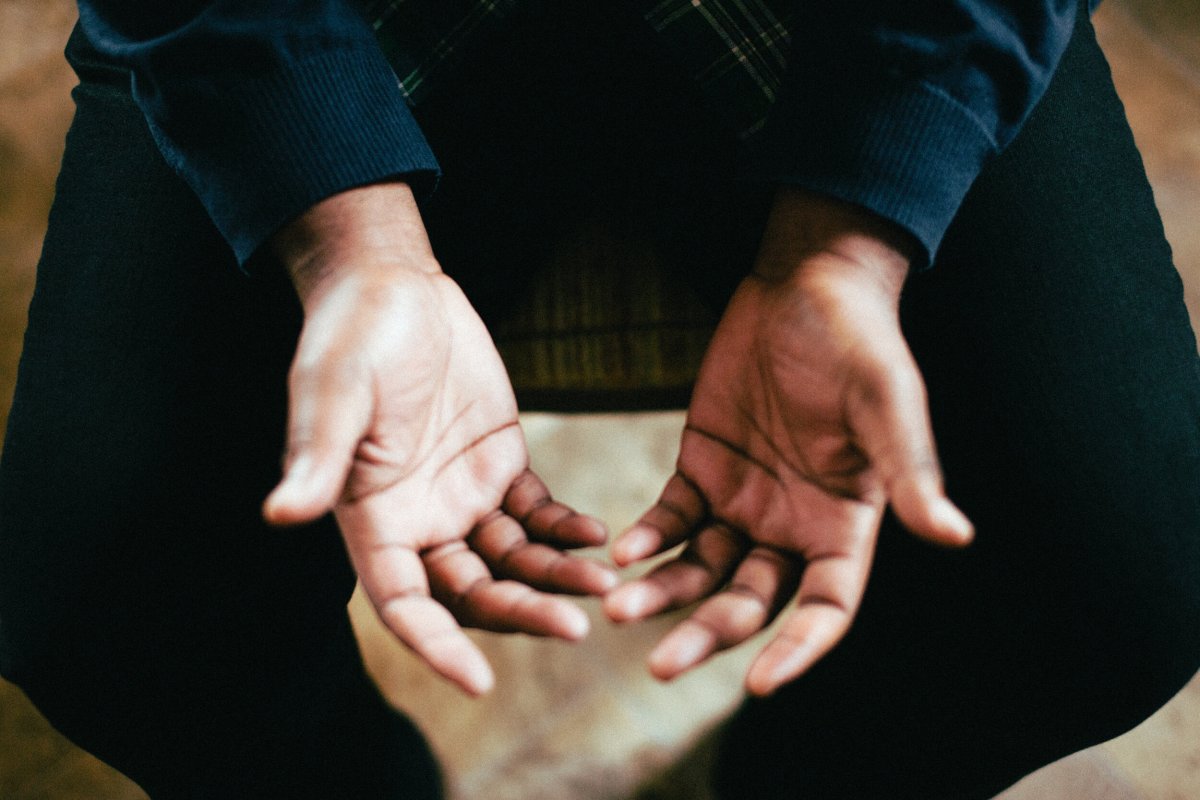
What you do with your hands in life is infinitely more important than learning to hold a golf club correctly. My dad was always creating things with his hands. I don’t know if he ever read Ecclesiastes 10:18, “through idleness of hands the house leaks”, but I do know that no house we ever lived in was going to leak, because he had the farthest thing from idle hands. Maybe your dad was like that too so you can appreciate what I am saying. One of the fascinating thing about hands is that they will tell you a lot under close examination. A surgeon’s hands require delicate work, so they are in pristine condition. A mechanic’s hands are often greasy, dirty, with chipped nails. A farmer’s hands are calloused and sunbaked. A construction worker’s hands are usually scratched, bruised, and blistered. And an artist’s hands might be covered with clay, paint, or chalk, depending on their chosen medium. In other words, hands tell a story of who someone is. My dad’s hands were a combination of all these…well, maybe not the surgeon’s hands, but definitely the rest. That’s because he was a combination of all those kinds of people. If you remember from a couple of weeks ago, I wrote about all the cars and motorcycles he worked on, so his hands were greasy a lot. (Just now, I remember my dad had this kind of hand cleaner in a silver can that was the consistency of watered down Crisco shortening. It had an interesting smell, but it sure could clean your hands of all grease and oil). My dad grew up on a farm, so he well understood farmer hands, and he was masterful when it came to creating things out of wood, so he often had stain, paint, or sealant on his hands. And when it came to construction type of work, my dad never shied away from big projects. He put new siding on the house; re-shingled the roof; remodeled the kitchen; framed, tiled, and built a second bathroom in the basement; and even built a deck on the back of the house. And when winter came, he would be out there with the snowblower and shovel, going down the street clearing driveways and sidewalks of numerous neighbors. So, you see he never let idle hands be a thing.
My dad worked as a machinist on an assembly line for 37 years. His hands were always either fixing things on those lines or changing parts out to accommodate different products. The company he worked for made cans for many food production companies, and chances are you ate or drank something out of a container or can that was made on his line. And a few years before he landed that job, my dad served in the Navy where he was an aircraft mechanic. Again, busy hands fixing things. My dad is 90 now, and he moves slower, but he still finds ways to keep those hands active. He and my mom find time to help feed the homeless at local shelters, along with many other service projects they do with their church. In recent years, they’ve been bell ringers for the Salvation Army. I’m pretty sure that those hands will stay busy for as long as he walks on this earth.
I like to think that one of the lessons I learned from him was to avoid idle hands, keeping busy doing productive things…not just doing things for the sake of doing things but accomplishing meaningful work with the hands I’ve been given. Like my dad, I hope to be finding things for my hands to build and fix, and projects that serve and help others, for decades to come. And who knows how many more magical golf shots I have left in these two hands.
 Faith, Leadership, and History