
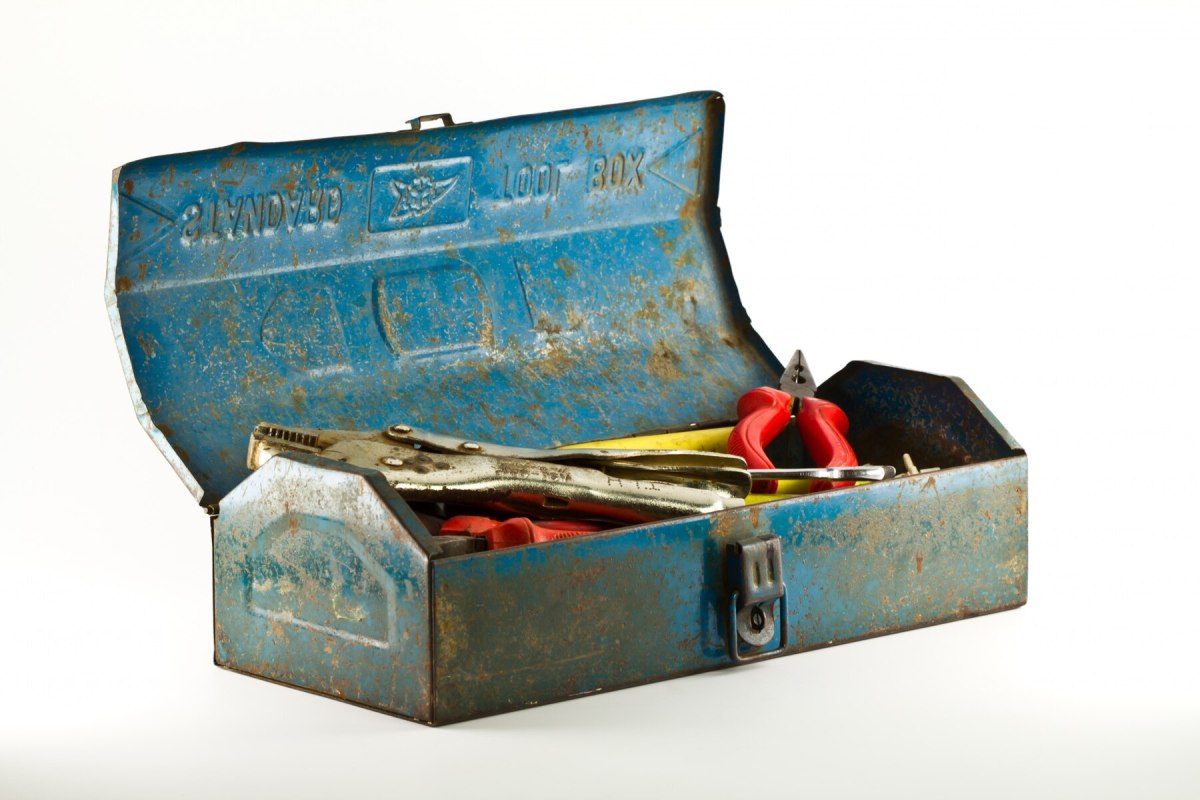
Chances are you have this object located somewhere in your home…maybe in your garage. If you’ve ever had to fix something in a hurry, you might have turned to this wonderful tool. I recently used it under the hood of my car. You’re going to laugh it this. There is a bracket that holds some wires above the engine block. Well, that bracket had plastic tabs that held it in place, and they broke. Not knowing what to do before I could get it into the mechanic to get it fixed, and not wanting the wires to sit on a hot engine block, I found myself grabbing the most universal fix-it tool on the planet…duct tape. Yep, that’s right, I used duct tape on my car. And you know what? It worked. For over a month, it held that bracket in place. And then the mechanic fixed it. And all was right with the world again…well, that is a bit of a stretch. But I didn’t have to worry about melted wires on my car anymore.
They say…(btw, are you like me when people tell you “they say”, you wonder who the “they” are?). Anyway, they say that duct tape can fix anything, and I am sort of inclined to believe it. Not really, but they say it, so what else am I supposed to believe? Don’t get me wrong, duct tape can, and does, fix a lot of things…at least temporary. Can’t find that exact screw size to hold two pieces together? Duct tape it. Can’t get to the store to buy some glue? Duct tape it. Can’t secure something with clamps? Duct tape it. And yes, need to hold a wire bracket in place so it doesn’t melt? Duct tape it. When you need something in an emergency, but don’t have the right stuff, you use what you got.
This week, we return to 1775. The war for freedom hasn’t even gotten off the ground yet, and there a whole host of problems. First and most obvious is, the guys on one side have received some professional training in the art of war. The other side…not so much. They are farmers, blacksmiths, mariners, millers, and other shopkeepers and traders. One side has a ton of artillery. The other side has nowhere near that many. One side has thousands and thousands of soldiers, on foot, on horses, on ships. The other side could only muster a few hundred at times. When we talk today of asymmetric warfare, the colonialists are a perfect example. The United States, before it was the United States, needed an army that on paper matched the Brits. But, when you need something in an emergency, but don’t have the right stuff, you use what you got.
As the British approached Lexington and Concord, the Minutemen (named that because they had to be ready to go in a minute) lacked nearly every resource one needs to successfully wage a war. Short on ammunition, they had torn down the organ pipes from a local Anglican church and melted them into musket balls. To help with the ever-increasing need for shelter, the call went out for those who made ship sails to repurpose their product into tents for the growing army. Bread, meat, and other supplies were requisitioned and redirected from locations up and down the east coast and sent to where they were needed at the moment…Boston. Like the weekend DIYer who lacks the tool needed to correctly fix the problem, you go with what you got.
Angst had been brewing for some time. Tensions were high. The moment had come; the armies met. Well, more like an army met a mob. But that mob was fierce, for they were defending their homes, their livelihood, their rights. The British, thinking that this would be a one and done kind of war, were in for a special treat. That first skirmish outside Concord cost the Americans two dead and three injured. The British had three killed and seven wounded. Surprisingly, the British Army, though trained to fight, turned tail and ran. Something had caused them to forget their discipline; perhaps the sight of a fellow soldier lying dead at their feet. Whatever it was, they retreated…fast. If the British had seen enough this first day, the opposite was true for the Americans. They reorganized, pushed out, and secretly pursued the Redcoats the whole way back to Boston…a distance of more than 10 miles. Seven times the Americans surprised the British on that trek. And seven times more British fell from musket balls fired by hidden Minutemen. It would not be a good look for those Redcoats, relentlessly retreating from a force inferior in every way imaginable. That inferior force that used what they had.
Let me come full circle and get back to that magic universal fix-it-all. We use it because it is what we have at the ready. Just like those early Revolutionaries. They used what they could get their hands on to eventually defeat the British. But though we use duct tape for seemingly endless tasks, there are a lot of things it cannot fix. If your car frame is split in two, you can’t tape that back together and hope to survive driving down the street. If you are sawing a piece of wood and you sever your finger, you can’t just wrap duct tape around it and finish your project. And if it had existed in 1775, duct tape would not have made any difference in the outcome. It cannot fix broken car frames and it cannot fix fighting nations, though we might wish it could do both. There is one other thing that duct tape cannot fix…the soul.
We have an invisible part of us that is broken and desperately needs a remedy. Duct tape, even though it can fix a myriad of breakage, cannot fix the soul. Only one can do that…God. He is in the professional business of repairing souls. He does what nothing and no one else can. He puts lives back together. And that is absolutely one thing that duct tape cannot do. The Psalmist reminds us, “He heals the brokenhearted and binds up their wounds.” God is right there when you need to be put back together. And the best thing about that is when you turn to Him, you don’t have to hope that it will hold for a week or two. God works in the realm of eternity, so what he fixes is permanent. So go ahead, put that duct tape back in the toolbox, you won’t need it today.
 Faith, Leadership, and History